<div class="wpdevart-preloader-custom-style"><div class="wpdevart-preloader-three-loader"></div></div>
        <script>
        document.body.style.overflow = "hidden";
        document.addEventListener("DOMContentLoaded", () => setTimeout( function() { document.querySelector("div.wpdevart-preloader-custom-style").remove(); document.body.style.overflow = "visible"; } , 1 * 1000));
        </script>
        <?xml version="1.0" encoding="UTF-8"?><rss version="2.0"
	xmlns:content="http://purl.org/rss/1.0/modules/content/"
	xmlns:wfw="http://wellformedweb.org/CommentAPI/"
	xmlns:dc="http://purl.org/dc/elements/1.1/"
	xmlns:atom="http://www.w3.org/2005/Atom"
	xmlns:sy="http://purl.org/rss/1.0/modules/syndication/"
	xmlns:slash="http://purl.org/rss/1.0/modules/slash/"
	>

<channel>
	<title>Blue Inked Notary</title>
	<atom:link href="https://blueinked.com/feed/" rel="self" type="application/rss+xml" />
	<link>https://blueinked.com</link>
	<description>Mobile Notary</description>
	<lastBuildDate>Wed, 12 Nov 2025 20:17:36 +0000</lastBuildDate>
	<language>en-US</language>
	<sy:updatePeriod>
	hourly	</sy:updatePeriod>
	<sy:updateFrequency>
	1	</sy:updateFrequency>
	<generator>https://wordpress.org/?v=7.0.2</generator>

<image>
	<url>https://blueinked.com/wp-content/uploads/2025/10/Blue-Inked-logo-blue-background-150x150.jpg</url>
	<title>Blue Inked Notary</title>
	<link>https://blueinked.com</link>
	<width>32</width>
	<height>32</height>
</image> 
<site xmlns="com-wordpress:feed-additions:1">249103963</site>	<item>
		<title>Why Hire a Certified Notary Trust Delivery Agent &#124; Blue Inked Mobile Notary</title>
		<link>https://blueinked.com/certified-notary-trust-delivery-agent/</link>
					<comments>https://blueinked.com/certified-notary-trust-delivery-agent/#respond</comments>
		
		<dc:creator><![CDATA[Blue Inked]]></dc:creator>
		<pubDate>Tue, 11 Nov 2025 00:07:36 +0000</pubDate>
				<category><![CDATA[Education]]></category>
		<category><![CDATA[Why Mobile Notary]]></category>
		<category><![CDATA[attorney]]></category>
		<category><![CDATA[estate planning]]></category>
		<category><![CDATA[living trust]]></category>
		<category><![CDATA[mobile notary]]></category>
		<category><![CDATA[trust delivery]]></category>
		<guid isPermaLink="false">https://blueinked.com/?p=414</guid>

					<description><![CDATA[Learn why estate planning attorneys in Fairfield, Licking, Perry, and Franklin counties trust Blue Inked Mobile Notary for professional Certified Notary Trust Delivery Agent services. Estate planning attorneys handle some of the most personal and important legal matters a client will ever face. When it’s time to sign and deliver trust documents, you need someone [&#8230;]]]></description>
										<content:encoded><![CDATA[
<p class="wp-block-paragraph">Learn why estate planning attorneys in Fairfield, Licking, Perry, and Franklin counties trust Blue Inked Mobile Notary for professional Certified Notary Trust Delivery Agent services.</p>


<figure class="wp-block-image size-large"><img fetchpriority="high" decoding="async" width="1024" height="683" src="https://blueinked.com/wp-content/uploads/2025/11/happy-female-notary-having-meeting-with-young-couple-pointing-place-signature-their-living-trust-1024x683.jpg" alt="Happy female notary showing young couple where to sign their living trust documents." class="wp-image-415" srcset="https://blueinked.com/wp-content/uploads/2025/11/happy-female-notary-having-meeting-with-young-couple-pointing-place-signature-their-living-trust-1024x683.jpg 1024w, https://blueinked.com/wp-content/uploads/2025/11/happy-female-notary-having-meeting-with-young-couple-pointing-place-signature-their-living-trust-300x200.jpg 300w, https://blueinked.com/wp-content/uploads/2025/11/happy-female-notary-having-meeting-with-young-couple-pointing-place-signature-their-living-trust-768x512.jpg 768w, https://blueinked.com/wp-content/uploads/2025/11/happy-female-notary-having-meeting-with-young-couple-pointing-place-signature-their-living-trust-1536x1024.jpg 1536w, https://blueinked.com/wp-content/uploads/2025/11/happy-female-notary-having-meeting-with-young-couple-pointing-place-signature-their-living-trust-2048x1365.jpg 2048w" sizes="(max-width: 1024px) 100vw, 1024px" /><figcaption class="wp-element-caption">Happy real estate agent having a meeting with young couple and pointing at place of signature on their contract.</figcaption></figure>


<p class="wp-block-paragraph">Estate planning attorneys handle some of the most personal and important legal matters a client will ever face. When it’s time to sign and deliver trust documents, you need someone who can ensure the process runs smoothly, accurately, and with the same level of professionalism you bring to your own practice. That’s where a <strong>Certified Notary Trust Delivery Agent (CNTDA)</strong> comes in.</p>


<p class="wp-block-paragraph">As a <strong>Certified Notary Trust Delivery Agent</strong> and owner of <strong>Blue Inked Mobile Notary</strong>, I specialize in assisting attorneys and their clients with the delivery and notarization of estate planning documents, including a living trust, will, power of attorney, and more. My goal is to make your client’s signing appointment stress-free and perfectly executed—so you can focus on the legal work, not the logistics.</p>


<h2 class="wp-block-heading"><strong>What Is a Certified Notary Trust Delivery Agent?</strong></h2>


<p class="wp-block-paragraph">A Certified Notary Trust Delivery Agent (CNTDA) is a trained and vetted notary professional who has completed specialized certification in the handling and presentation of trust and estate documents. This certification goes beyond standard notary training. It ensures I understand the structure of a trust package, the role of the trustee and beneficiaries, and the importance of maintaining confidentiality and accuracy during every step of the signing process.</p>


<p class="wp-block-paragraph">In short, hiring a CNTDA means you’re working with someone who’s qualified to represent your law firm professionally while guiding your clients through complex legal documents with care and clarity.</p>


<h2 class="wp-block-heading"><strong>Why Estate Planning Attorneys Benefit from Partnering with a CNTDA</strong></h2>


<h3 class="wp-block-heading"><strong>1. A Professional Extension of Your Office</strong></h3>


<p class="wp-block-paragraph">When I meet with your clients, I represent you. That means showing up on time, presenting documents in the correct order, and ensuring every signature, initial, and notarization is executed exactly as required. Your clients receive the same professionalism they’d experience sitting in your conference room.</p>


<h3 class="wp-block-heading"><strong>2. A Smooth, Confident Client Experience</strong></h3>


<p class="wp-block-paragraph">Estate planning signings can be emotional. Clients are making big decisions about their futures and their loved ones. As a Certified Notary Trust Delivery Agent, I’m trained to walk clients through each document calmly, ensuring they understand what they’re signing (without giving legal advice) and feel comfortable throughout the process.</p>


<h3 class="wp-block-heading"><strong>3. Accuracy and Compliance You Can Trust</strong></h3>


<p class="wp-block-paragraph">A single missed signature or incorrect acknowledgment can delay the execution of an entire trust package. My certification and attention to detail help prevent costly errors. Every document is reviewed for completion before I leave the appointment, and I ensure that your originals are handled, packaged, and returned exactly according to your instructions.</p>


<h3 class="wp-block-heading"><strong>4. Flexibility That Fits Your Clients’ Lives</strong></h3>


<p class="wp-block-paragraph">As a <strong>mobile notary</strong>, I travel to your clients wherever they’re most comfortable—whether that’s their home, office, or a care facility. I serve <strong>Fairfield, Licking, Perry, and Franklin counties</strong>, offering flexible scheduling to meet your clients’ needs. This mobility helps you provide exceptional service without adding to your staff’s workload.</p>


<h2 class="wp-block-heading"><strong>Why Certification Matters</strong></h2>


<p class="wp-block-paragraph">Anyone can become a notary, but not every notary understands the complexity of estate planning documents. Certification as a <strong>Notary Trust Delivery Agent</strong> demonstrates advanced training and a commitment to excellence. It assures attorneys that I have the knowledge to handle trust documentation correctly and the professionalism to manage sensitive information and client&nbsp;interactions with care and discretion.</p>


<h2 class="wp-block-heading"><strong>Partnering with Blue Inked Mobile Notary</strong></h2>


<p class="wp-block-paragraph">At Blue Inked Mobile Notary, I view every trust signing as a partnership. You’ve already earned your clients’ trust—my role is to uphold that same level of integrity through the final step of the process: executing and notarizing the documents properly.</p>


<p class="wp-block-paragraph">Whether you need a one-time delivery or ongoing assistance with estate signings, I bring reliability, organization, and professionalism to all trust delivery&nbsp;appointments. You can count on prompt communication, accurate document handling, and a positive experience for your clients from start to finish.</p>


<h2 class="wp-block-heading"><strong>Let’s Simplify Your Trust Signings</strong></h2>


<p class="wp-block-paragraph">If you’re an estate planning attorney in <strong>Fairfield, Licking, Perry, or Franklin County</strong>, I’d love to help streamline your client signings and take the paperwork stress off your plate.</p>


<p class="wp-block-paragraph"><a href="https://blueinked.com/contact/" data-type="page" data-id="309">Contact</a> <strong>Bobbie at Blue Inked Mobile Notary today</strong> to discuss how partnering with a Certified Notary Trust Delivery Agent can save you time, build client confidence, and keep your document signings running flawlessly.</p>


<p class="wp-block-paragraph"></p>
]]></content:encoded>
					
					<wfw:commentRss>https://blueinked.com/certified-notary-trust-delivery-agent/feed/</wfw:commentRss>
			<slash:comments>0</slash:comments>
		
		
		<post-id xmlns="com-wordpress:feed-additions:1">414</post-id>	</item>
		<item>
		<title>What Is an Affidavit of Non-Ownership &#124; Blue Inked Mobile Notary</title>
		<link>https://blueinked.com/affidavit-of-non-ownership/</link>
					<comments>https://blueinked.com/affidavit-of-non-ownership/#respond</comments>
		
		<dc:creator><![CDATA[Blue Inked]]></dc:creator>
		<pubDate>Wed, 29 Oct 2025 15:39:20 +0000</pubDate>
				<category><![CDATA[Education]]></category>
		<guid isPermaLink="false">https://blueinked.com/?p=395</guid>

					<description><![CDATA[A notarized statement of non-ownership affidavit is a legal document in which a person swears (under penalty of perjury) that they do not own—or no longer own—a specific vehicle. It is “notarized” because a notary public witnesses your signature, confirming your identity and adding weight to your declaration. Such a document can serve as proof [&#8230;]]]></description>
										<content:encoded><![CDATA[
<p class="wp-block-paragraph">A <strong>notarized statement of non-ownership</strong> affidavit is a legal document in which a person swears (under penalty of perjury) that they do <em>not</em> own—or no longer own—a specific vehicle. It is “notarized” because a <strong>notary public</strong> witnesses your signature, confirming your identity and adding weight to your declaration.</p>


<p class="wp-block-paragraph">Such a document can serve as proof of your <strong>non-ownership status</strong> when asked by a <strong>DMV office</strong>, a court, an <strong>insurance company</strong>, or other entities that need to clarify who <strong>owns the vehicle</strong>. It’s especially useful when confusion arises over title, registration, or liability.</p>


<figure class="wp-block-image size-large"><img decoding="async" width="1024" height="512" src="https://blueinked.com/wp-content/uploads/2025/10/Affidavit-stamped-1024x512.jpg" alt="Paper stamped with word Affidavit with a fountain pen laying on the paper" class="wp-image-397" srcset="https://blueinked.com/wp-content/uploads/2025/10/Affidavit-stamped-1024x512.jpg 1024w, https://blueinked.com/wp-content/uploads/2025/10/Affidavit-stamped-300x150.jpg 300w, https://blueinked.com/wp-content/uploads/2025/10/Affidavit-stamped-768x384.jpg 768w, https://blueinked.com/wp-content/uploads/2025/10/Affidavit-stamped-1536x768.jpg 1536w, https://blueinked.com/wp-content/uploads/2025/10/Affidavit-stamped-2048x1024.jpg 2048w" sizes="(max-width: 1024px) 100vw, 1024px" /><figcaption class="wp-element-caption">3D illustration of a rubber stamp and a fountain pen over a sheet of paper where it is written the word affidavit. Justice concept.</figcaption></figure>


<h2 class="wp-block-heading">Why and When You Might Need One</h2>


<p class="wp-block-paragraph">You may need a notarized statement of non-ownership in situations like:</p>


<ul class="wp-block-list">
<li>Someone claims you are the <strong>owner of the vehicle</strong>, but you no longer are.</li>


<li>A citation, parking ticket, or toll violation is assigned to a license plate tied to your name, but you sold or transferred the car.</li>


<li>An <strong>insurance company</strong> or <strong>motor vehicle service center</strong> requests confirmation you no longer hold <strong>ownership interests</strong> in the car.</li>


<li>You sold a car but never transferred the <strong>certificate of title</strong> or recorded the <strong>bill of sale</strong>, and now the title or registration is still in your name.</li>


<li>You want to support a <strong>notice of sale</strong> or a <strong>statement of non ownership Florida</strong> (or in your state) to prevent liability after a sale.</li>


<li>As part of processing a <strong>vehicle registration application</strong>, the state DMV wants you to clarify who the <strong>new owner</strong> is.</li>
</ul>


<p class="wp-block-paragraph">In many states, if you sell or transfer a car, you’re supposed to file a <strong>notice of transfer</strong> or release of liability. If you fail to do that, the DMV may still see you as the registered owner. In that case, a notarized statement of non-ownership can help protect you.</p>


<h2 class="wp-block-heading" id="isPasted">Key Terms You Should Know</h2>


<p class="wp-block-paragraph">To follow along more easily, here are a few key terms:</p>


<figure class="wp-block-table"><table class="has-fixed-layout"><thead><tr><th>Term</th><th>What It Means</th></tr></thead><tbody><tr><td>Certificate of title</td><td>The document that proves you are the legal <strong>owner of the vehicle</strong>.</td></tr><tr><td>Bill of sale</td><td>A document evidencing the <strong>purchase price</strong> and transfer from seller to buyer.</td></tr><tr><td>Vehicle identification number (VIN)</td><td>The unique serial number that identifies the <strong>specific vehicle</strong>.</td></tr><tr><td>New owner</td><td>The person to whom ownership is transferred.</td></tr><tr><td>Transfer of ownership</td><td>The legal process of moving title from one person to another.</td></tr><tr><td>Affidavit of abandonment / affidavit in lieu</td><td>Some states accept a substitute or alternative affidavit when the title is lost or unavailable.</td></tr><tr><td>Power of attorney</td><td>If you can’t appear in person, someone else may sign on your behalf (if properly authorized) and then have that document notarized.</td></tr><tr><td>Required fields / designated fields</td><td>The blanks or lines in the form you must fill out to make it valid.</td></tr><tr><td>Complete fillable fields</td><td>The idea that all required parts must be filled in—no blank required boxes.</td></tr><tr><td>Legal forms</td><td>The official, often state-approved templates used for affidavits, title transfers, etc.</td></tr></tbody></table></figure>


<h2 class="wp-block-heading" id="isPasted">What a Notarized Statement of Non-Ownership Should Include</h2>


<p class="wp-block-paragraph">Although every state may have its own version or required form, most statements or affidavits of non-ownership include the following <strong>required fields</strong> or components:</p>


<ol class="wp-block-list">
<li><strong>Full name</strong> and contact information of the declarant (you).</li>


<li>Your <strong>personal information</strong> (address, driver license or ID number, sometimes Social Security in some contexts).</li>


<li>The <strong>license plate</strong> number, make, model, year, and <strong>vehicle identification number (VIN)</strong> of the <strong>specific vehicle</strong> in question.</li>


<li>A declaration in plain language, e.g.:“I, [full name], hereby declare that I am <strong>not</strong> the present owner or co-owner of the vehicle described above, and I have no ownership interest in it.”</li>


<li>If applicable, a statement of when and how you ceased ownership (sale, trade, transfer) and to <strong>whom</strong> (the <strong>new owner</strong>).</li>


<li>Details from the <strong>bill of sale</strong>, such as <strong>purchase price</strong>, date of sale, and signatures.</li>


<li>A clause affirming the truthfulness of your statement (i.e. under penalty of perjury) and your understanding that false statements may carry legal consequences.</li>


<li>Space for your signature and date.</li>


<li>Space for the <strong>notary public</strong> to sign, apply their seal or stamp, and record the commission expiration.</li>


<li>If applicable, a <strong>power of attorney</strong> reference if someone else is signing for you.</li>


<li>Any extra fields if your state or DMV requires additional data (e.g. state, county, or designated <strong>legal forms</strong> numbering).</li>
</ol>


<p class="wp-block-paragraph">Make sure you <strong>completely fill all required fields</strong> — missing or blank required fields may invalidate your document.</p>


<p class="wp-block-paragraph">In states like Florida, you may see a form titled <strong>“Statement of Non Ownership of Vehicle Florida”</strong> specifically.</p>


<p class="wp-block-paragraph">Other states use different names—for example, <strong>“Affidavit of Non-Ownership,” “Declaration of Non-Ownership,” “Affidavit of Loss / Release of Interest,”</strong> or <strong>“Affidavit in Lieu of Title.”</strong>&nbsp;</p>


<hr class="wp-block-separator has-alpha-channel-opacity"/>


<p class="wp-block-paragraph">STATE OF <strong><em><strong><em>____</em></strong></em></strong><br>COUNTY OF <strong><em><strong><em>__</em></strong></em></strong></p>


<p class="wp-block-paragraph">I, <strong><em><strong><em>____________</em></strong></em></strong> (full name),<br>Address: <strong><em><strong><em>______________</em></strong></em></strong><br>Driver’s License / ID #: <strong><em><strong><em>__</em></strong></em></strong></p>


<p class="wp-block-paragraph">Vehicle Info:</p>


<ul class="wp-block-list">
<li>License Plate: <strong><em><strong><em>______</em></strong></em></strong></li>


<li>Year / Make / Model: <strong><em><strong><em>__</em></strong></em></strong></li>


<li>VIN: <strong><em><strong><em>__________________</em></strong></em></strong></li>
</ul>


<p class="wp-block-paragraph">Declaration:<br>I declare that I <strong>do not own</strong> and am not now a co-owner of the vehicle described above. I have no ownership interests in this vehicle. I ceased to own it on <strong><em>/</em></strong>/<strong><em>_ by sale/transfer to <strong><em>_____</em></strong></em></strong> (new owner).</p>


<p class="wp-block-paragraph">Bill of Sale Info (if applicable):<br>Date of sale: <strong><em>/</em></strong>/<strong><em>_ Purchase price: $_____</em></strong></p>


<p class="wp-block-paragraph">I affirm under penalty of perjury that the foregoing is true and correct.</p>


<p class="wp-block-paragraph">Signature: <strong><em><strong><em>____________</em></strong></em></strong> Date: <strong><em>/</em></strong>/<em>__</em></p>


<p class="wp-block-paragraph"><strong>Notary Section</strong><br>State of <strong><em><strong><em>____</em></strong></em></strong><br>County of <strong><em><strong><em>____</em></strong></em></strong><br>On this <strong>_ day of <em>, 20</em></strong><em>, before me, a Notary Public, personally appeared <strong><em><strong>___________</strong></em></strong></em>,<br>known to me (or satisfactorily proven) to be the person whose name is subscribed above, and who sworn to and subscribed the foregoing.<br>Notary Signature: <strong><em><strong><em>______</em></strong></em></strong><br>My commission expires: <strong><em><strong><em>__</em></strong></em></strong><br>(Seal / Stamp)</p>


<p class="wp-block-paragraph">It&#8217;s really as easy as that! You can type it up and print it out or simply hand write it and present it to a notary. Since you are attesting to the information in the document, wait until you are in front of a notary to sign it.</p>


<p class="wp-block-paragraph"></p>


<h2 class="wp-block-heading">Steps to Create and Use Your Notarized Statement</h2>


<ol class="wp-block-list">
<li><strong>Obtain a state-appropriate form or draft your own</strong> (see sample above). Some DMVs publish official forms; others accept a custom affidavit so long as it meets criteria.</li>


<li><strong>Fill in all required fields fully (designated fields)</strong> including license plate, VIN, full name, and details of the sale or transfer.</li>


<li><strong>Do not sign</strong> until you are in front of a notary (unless your state allows pre-signing).</li>


<li><strong>Appear before a notary public</strong> with valid identification (driver’s license, passport).</li>


<li><strong>Sign the document</strong> in the notary’s presence; the notary signs, dates, and stamps or seals.</li>


<li><strong>Make copies</strong> (keep some for your records).</li>


<li><strong>Submit</strong> the notarized statement to the requesting party—this may be the DMV, your insurance company, a court, or motor vehicle service center.</li>


<li>In some cases, file a <strong>notice of transfer / release of liability</strong> with the DMV if your state requires it, to complete the <strong>transfer of ownership</strong> process.</li>
</ol>


<p class="wp-block-paragraph">If you cannot attend in person, some states may allow a <strong>power of attorney</strong> to sign on your behalf, but that too may require notarization and adherence to state rules.</p>


<h2 class="wp-block-heading">What This Doesn’t Replace</h2>


<ul class="wp-block-list">
<li>A notarized non-ownership statement is <strong>not</strong> a substitute for transferring title in states that require it. If the <strong>certificate of title</strong> is still in your name, you should complete a <strong>bill of sale</strong> and title transfer if possible.</li>


<li>If a <strong>proof of ownership</strong> is needed (for example, to register or insure a vehicle), the <strong>certificate of title</strong> is usually the gold standard.</li>


<li>In cases where a vehicle has been abandoned, destroyed, or you can’t locate the buyer, some states allow an <strong>affidavit of abandonment</strong> or <strong>affidavit in lieu</strong> of title form.</li>


<li>A non-ownership statement may not absolve you of every liability—if the DMV or court sees ambiguity or fraud, the document’s weight depends on local law and context.</li>
</ul>


<h2 class="wp-block-heading">State Variations and Tips</h2>


<ul class="wp-block-list">
<li>Some states publish <strong>official non-ownership or non-use forms</strong> (e.g. <strong>DR 2056</strong> in <strong>Colorado</strong>, a restricted license affidavit of non-ownership)</li>


<li>In <strong>Florida</strong>, a “statement of non ownership of vehicle Florida” form is available to help clarify non-ownership when title or registration is in question.</li>


<li>In <strong>Washington State</strong>, the <strong>Affidavit of Loss / Release of Interest</strong> form includes a section for releasing your interest in a vehicle, and must be signed by all registered owners and notarized.</li>


<li>In many states, if you sell a vehicle, you should also file a <strong>notice of transfer and release of liability</strong> with the DMV (so the state knows you are no longer responsible).</li>


<li>If you&#8217;re dealing with out-of-state title issues, some DMVs may require additional proof (e.g. chain of ownership, bills of sale) beyond just the non-ownership statement.</li>
</ul>


<h2 class="wp-block-heading">Common Mistakes to Avoid</h2>


<ul class="wp-block-list">
<li>Leaving required fields blank (never skip <strong>complete fillable fields</strong>).</li>


<li>Signing before seeing the notary or without proper ID.</li>


<li>Using a generic template that doesn’t include state-required language or disclaimers.</li>


<li>Not also filing a <strong>notice of transfer</strong> or <strong>release of liability</strong> if your state requires it.</li>


<li>Assuming this document alone absolves liability—always check state rules and possibly consult legal counsel.</li>


<li>Not keeping a copy for your records.</li>
</ul>


<h2 class="wp-block-heading">Final Thoughts</h2>


<p class="wp-block-paragraph">A <strong>notarized statement of non-ownership</strong> is a useful tool when you need to formally declare you don’t own a particular vehicle. It adds credibility because of the notary seal and can serve as evidence in disputes involving your <strong>name, license plate, title, registration, or insurance company</strong>.</p>


<p class="wp-block-paragraph">However, it should be used in tandem with proper title transfer, bill of sale, and filing of release or notice of transfer as required in your state’s DMV rules. Always confirm your state’s specific requirements and whether the requesting party (DMV, court, insurance company) accepts such affidavits.</p>


<p class="wp-block-paragraph">Need to have an affidavit of non-ownership notarized? <a href="https://blueinked.com/contact/">Contact me</a> and I&#8217;ll help you out</p>


<pre class="wp-block-preformatted"><br><br></pre>


<p class="wp-block-paragraph"></p>
]]></content:encoded>
					
					<wfw:commentRss>https://blueinked.com/affidavit-of-non-ownership/feed/</wfw:commentRss>
			<slash:comments>0</slash:comments>
		
		
		<post-id xmlns="com-wordpress:feed-additions:1">395</post-id>	</item>
		<item>
		<title>Loan Signing Agent vs Notary Public: What Sets Them Apart &#124; Blue Inked Mobile Notary</title>
		<link>https://blueinked.com/signing-agent-vs-notary-public/</link>
					<comments>https://blueinked.com/signing-agent-vs-notary-public/#respond</comments>
		
		<dc:creator><![CDATA[Blue Inked]]></dc:creator>
		<pubDate>Sun, 19 Oct 2025 16:35:20 +0000</pubDate>
				<category><![CDATA[Education]]></category>
		<category><![CDATA[Why Mobile Notary]]></category>
		<guid isPermaLink="false">https://blueinked.com/?p=313</guid>

					<description><![CDATA[Key Differences Learn the key differences between a traditional notary public and a notary signing agent, including education requirements, pay, equipment, and what makes loan package signings so rewarding. When most people think of a notary, they picture someone stamping a document to make it official. But there’s a big difference between a general Notary [&#8230;]]]></description>
										<content:encoded><![CDATA[
<figure class="wp-block-image size-large"><img decoding="async" width="1024" height="610" src="https://blueinked.com/wp-content/uploads/2025/10/loan-signing-agent-finalizing-mortgage-loan-package-1024x610.jpg" alt="Smiling couple sitting across the table from smiling loan signing agent while she explains a mortgage document." class="wp-image-315" srcset="https://blueinked.com/wp-content/uploads/2025/10/loan-signing-agent-finalizing-mortgage-loan-package-1024x610.jpg 1024w, https://blueinked.com/wp-content/uploads/2025/10/loan-signing-agent-finalizing-mortgage-loan-package-300x179.jpg 300w, https://blueinked.com/wp-content/uploads/2025/10/loan-signing-agent-finalizing-mortgage-loan-package-768x457.jpg 768w, https://blueinked.com/wp-content/uploads/2025/10/loan-signing-agent-finalizing-mortgage-loan-package-1536x915.jpg 1536w, https://blueinked.com/wp-content/uploads/2025/10/loan-signing-agent-finalizing-mortgage-loan-package-2048x1220.jpg 2048w" sizes="(max-width: 1024px) 100vw, 1024px" /><figcaption class="wp-element-caption">Meeting, financial advisor and couple with documents for insurance, mortgage investment and loan application. Finance, consultant and man and women with paperwork for planning, deal and contract.</figcaption></figure>


<h2 class="wp-block-heading">Key Differences</h2>


<p class="wp-block-paragraph">Learn the key differences between a traditional notary public and a notary signing agent, including education requirements, pay, equipment, and what makes loan package signings so rewarding.</p>


<p class="wp-block-paragraph">When most people think of a notary, they picture someone stamping a document to make it official. But there’s a big difference between a general <strong>Notary Public</strong> and a <strong>Loan Signing Agent</strong>. Both hold commissions from their respective states to verify identities and witness signatures—but the scope, extensive&nbsp;training, and responsibilities of a Loan Signing Agent go far beyond basic notarization.</p>


<p class="wp-block-paragraph">Let’s explore what sets them apart, what tools a signing agent needs, and why becoming one can be both rewarding and profitable.</p>


<h2 class="wp-block-heading">The Core Difference: Training and Purpose</h2>


<h3 class="wp-block-heading">What a Notary Public Does</h3>


<p class="wp-block-paragraph">A <strong>Notary Public</strong> serves as an impartial witness to deter fraud. Their crucial role is to verify the signer’s identity, confirm that the signer is acting willingly, and notarize legal paperwork such as affidavits, powers of attorney, or title transfers.</p>


<p class="wp-block-paragraph">They are not responsible for explaining the contents of the documents—they only confirm that the signing process follows legal procedure. Most notary commission&nbsp;jobs are quick and simple, taking just a few minutes to complete.</p>


<h3 class="wp-block-heading">What a Loan Signing Agent Does</h3>


<figure class="wp-block-image size-large"><img loading="lazy" decoding="async" width="683" height="1024" src="https://blueinked.com/wp-content/uploads/2025/10/still-life-documents-stack-683x1024.jpg" alt="Stack of documents using black binder clips as separators between each set." class="wp-image-320" srcset="https://blueinked.com/wp-content/uploads/2025/10/still-life-documents-stack-683x1024.jpg 683w, https://blueinked.com/wp-content/uploads/2025/10/still-life-documents-stack-200x300.jpg 200w, https://blueinked.com/wp-content/uploads/2025/10/still-life-documents-stack-768x1152.jpg 768w, https://blueinked.com/wp-content/uploads/2025/10/still-life-documents-stack-1024x1536.jpg 1024w, https://blueinked.com/wp-content/uploads/2025/10/still-life-documents-stack-1365x2048.jpg 1365w, https://blueinked.com/wp-content/uploads/2025/10/still-life-documents-stack-scaled.jpg 1707w" sizes="auto, (max-width: 683px) 100vw, 683px" /></figure>


<p class="wp-block-paragraph">A <strong>Loan Signing Agent (LSA)</strong> is a notary who has taken additional training and background screening to specialize in handling <strong>mortgage loan documents</strong>.</p>


<p class="wp-block-paragraph">Loan signing agents guide borrowers through stacks of paperwork during real estate industry transactions such as <strong>closings, refinances, and loan modifications</strong>. They ensure the set of loan documents are signed, dated, and initialed correctly before returning them to the escrow or title company.</p>


<p class="wp-block-paragraph">In short, while every loan signing agent is a notary, not every notary is a loan signing agent.</p>


<h2 class="wp-block-heading">The Extra Step: Certification and Background Checks</h2>


<figure class="wp-block-image size-large"><img loading="lazy" decoding="async" width="1024" height="683" src="https://blueinked.com/wp-content/uploads/2025/10/closeup-images-magnifying-glass-laptop-keyboard-1024x683.jpg" alt="Closeup of round, hand-held magnifying glass propped on its circular edge and handle on the trackpad of a laptop." class="wp-image-317" srcset="https://blueinked.com/wp-content/uploads/2025/10/closeup-images-magnifying-glass-laptop-keyboard-1024x683.jpg 1024w, https://blueinked.com/wp-content/uploads/2025/10/closeup-images-magnifying-glass-laptop-keyboard-300x200.jpg 300w, https://blueinked.com/wp-content/uploads/2025/10/closeup-images-magnifying-glass-laptop-keyboard-768x512.jpg 768w, https://blueinked.com/wp-content/uploads/2025/10/closeup-images-magnifying-glass-laptop-keyboard-1536x1024.jpg 1536w, https://blueinked.com/wp-content/uploads/2025/10/closeup-images-magnifying-glass-laptop-keyboard-2048x1365.jpg 2048w" sizes="auto, (max-width: 1024px) 100vw, 1024px" /><figcaption class="wp-element-caption">Closeup images of magnifying glass on laptop keyboard</figcaption></figure>


<p class="wp-block-paragraph">A regular notary must meet their state&#8217;s specific requirements—usually a background check through their commissioning state, an exam, and a bond/insurance. But to work with mortgage lenders and title companies, a <strong>loan signing agent must acquire an additional certification and&nbsp;pass an additional, federally compliant background check</strong> through the <strong>National Notary Association (NNA)</strong> or another approved agency.</p>


<p class="wp-block-paragraph">This extra screening is important because LSAs handle <strong>private financial and personal data</strong>, including Social Security numbers, loan amounts, and home addresses. Title companies need to trust that signing agents are reliable and secure with client information.</p>


<h2 class="wp-block-heading">The Tools of the Trade: What a Loan Signing Agent Needs</h2>


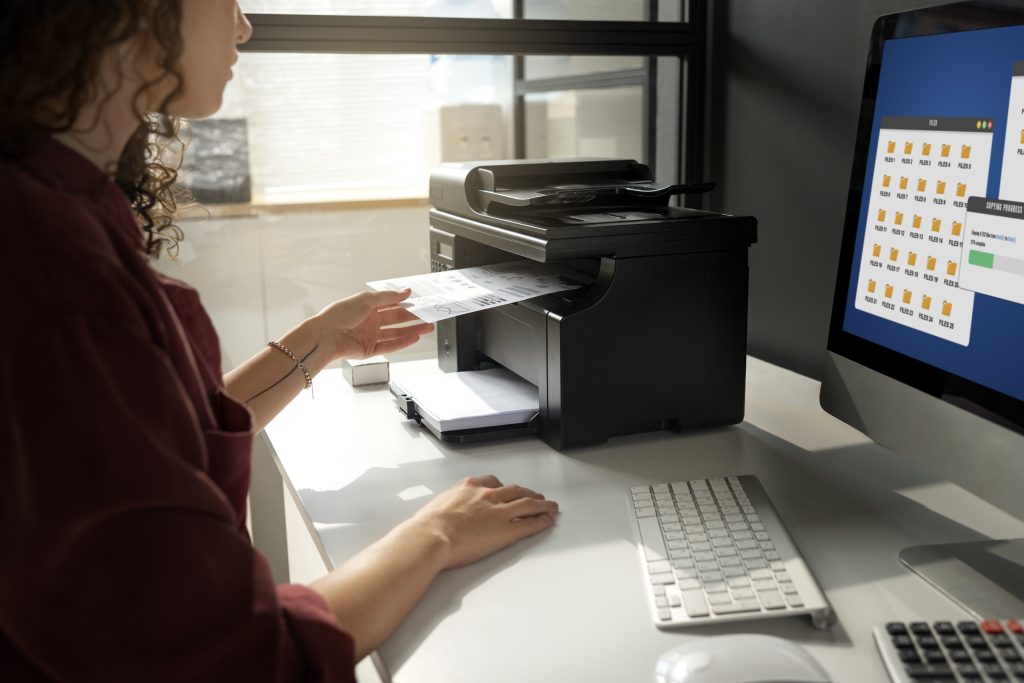
<figure class="wp-block-image size-large"><img loading="lazy" decoding="async" width="1024" height="683" src="https://blueinked.com/wp-content/uploads/2025/10/side-view-woman-scanning-documents-1024x683.jpg" alt="Woman with shoulder-length curly hair, wearing a brown shirt with the sleeves rolled up, sitting in front of desktop computer while scanning documents." class="wp-image-322" srcset="https://blueinked.com/wp-content/uploads/2025/10/side-view-woman-scanning-documents-1024x683.jpg 1024w, https://blueinked.com/wp-content/uploads/2025/10/side-view-woman-scanning-documents-300x200.jpg 300w, https://blueinked.com/wp-content/uploads/2025/10/side-view-woman-scanning-documents-768x512.jpg 768w, https://blueinked.com/wp-content/uploads/2025/10/side-view-woman-scanning-documents-1536x1024.jpg 1536w, https://blueinked.com/wp-content/uploads/2025/10/side-view-woman-scanning-documents-2048x1365.jpg 2048w" sizes="auto, (max-width: 1024px) 100vw, 1024px" /></figure>


<p class="wp-block-paragraph">Unlike a general notary who can operate with just a notary stamp, journal, and pen, although a Loan Signing Agent doesn&#8217;t necessarily need a corporate office to operate out of,&nbsp;successful, profitable loan signing businesses need a small mobile&nbsp;office setup to manage the job professionally.</p>


<h3 class="wp-block-heading">Essential Supplies and Equipment</h3>


<ul class="wp-block-list">
<li><strong>Dual-tray laser printer:</strong> To print both letter and legal-sized pages from loan packages.</li>


<li><strong>High-speed scanner:</strong> For producing quick and clear <strong>scanbacks</strong> (digital copies of signed documents).</li>


<li><strong>Reliable laptop or tablet:</strong> To receive assignments, download documents, and confirm appointments.</li>


<li><strong>Shipping supplies:</strong> Envelopes, labels, and tape for returning completed loan packages via FedEx or UPS.</li>


<li><strong>Mobile signing agent bag:</strong> To carry identification tools, pens, business cards, and forms on the go.</li>


<li><strong>Smartphone and GPS:</strong> Since loan signing agents travel frequently, accurate directions and communication are crucial.</li>
</ul>


<h2 class="wp-block-heading">Scanbacks and Document Returns: Getting It Right Every Time</h2>


<p class="wp-block-paragraph">After the appointment, signing agents often must <strong>scan the signed and notarized&nbsp;documents back to the title or escrow company</strong> for a preliminary quality check before dropping them off for overnight delivery.</p>


<p class="wp-block-paragraph">Accuracy and timeliness are essential. Late scanbacks or shipping delays can hold up a closing, causing stress for buyers, sellers, and lenders. A reliable signing agent follows instructions precisely and ships documents using the correct label, ensuring the package is secure and traceable.</p>


<p class="wp-block-paragraph">This attention to detail is possibly the main difference between a professional signing agent and a general notary. While both a general notary and Loan Signing Agent perform essential services, the latter type of notary public might notarize a single form and move on, while a Loan Signing Agent must treat each file like a mission-critical project.</p>


<h2 class="wp-block-heading">On the Road: The Mobile Notary Experience</h2>


<figure class="wp-block-image size-large"><img loading="lazy" decoding="async" width="1024" height="683" src="https://blueinked.com/wp-content/uploads/2025/10/woman-working-in-car-1024x683.jpg" alt="Woman sitting in driver's seat of parked car. She has brown skin, round glasses with gold metal rim, brown curly hair. She is hold a small coffee and her smartphone with her open laptop on her lap." class="wp-image-324" srcset="https://blueinked.com/wp-content/uploads/2025/10/woman-working-in-car-1024x683.jpg 1024w, https://blueinked.com/wp-content/uploads/2025/10/woman-working-in-car-300x200.jpg 300w, https://blueinked.com/wp-content/uploads/2025/10/woman-working-in-car-768x512.jpg 768w, https://blueinked.com/wp-content/uploads/2025/10/woman-working-in-car-1536x1025.jpg 1536w, https://blueinked.com/wp-content/uploads/2025/10/woman-working-in-car-2048x1366.jpg 2048w" sizes="auto, (max-width: 1024px) 100vw, 1024px" /><figcaption class="wp-element-caption">European girl using mobile phone on driver&#8217;s seat in personal automobile. Smiling young curly businesswoman wearing glasses. Person holding laptop computer and paper coffee cup. Multitasking</figcaption></figure>


<p class="wp-block-paragraph">Loan signing agents are often <strong>mobile notaries</strong>, meaning they travel to the borrower’s location—sometimes their home, office, or a public meeting space.</p>


<p class="wp-block-paragraph">This convenience is what sets the service apart. Borrowers appreciate being able to sign documents without driving to an escrow office. But this mobility also comes with responsibility.</p>


<h3 class="wp-block-heading">Safety and Professionalism in the Field</h3>


<p class="wp-block-paragraph">Since LSAs frequently enter clients’ homes or meet in unfamiliar neighborhoods, <strong>personal safety and professionalism</strong> are essential. Agents should always:</p>


<ul class="wp-block-list">
<li>Confirm appointments by phone beforehand.</li>


<li>Let someone know their schedule and location.</li>


<li>Maintain a calm, businesslike demeanor.</li>


<li>Trust their instincts and leave if they feel unsafe.</li>
</ul>


<p class="wp-block-paragraph">It’s a unique profession that requires both people skills and situational awareness.</p>


<h2 class="wp-block-heading">The Human Side: Helping People Achieve Milestones</h2>


<p class="wp-block-paragraph">Not all the benefits of being a loan signing agent are financial. There’s something truly special about being part of major life moments—like helping a couple close on their first home or assisting a family with a refinance that saves them money each month.</p>


<p class="wp-block-paragraph">Every appointment is a new experience, with new faces and new stories. Signing agents get to meet people from all walks of life, often at the best moments of their financial journeys. That human connection makes the work feel meaningful and personal.</p>


<h2 class="wp-block-heading">The Pay Difference: Why Signing Agents Earn More</h2>


<figure class="wp-block-image size-large"><img loading="lazy" decoding="async" width="1024" height="683" src="https://blueinked.com/wp-content/uploads/2025/10/close-up-hands-counting-money-1024x683.jpg" alt="Close-up of hands counting money. On the desk is a pen on a leather-covered notebook, black plastic rimmed glasses lay to the right of the notebook. A calculator is on the desk across from the notebook. A check lays almost out of view at the top, left corner." class="wp-image-326" srcset="https://blueinked.com/wp-content/uploads/2025/10/close-up-hands-counting-money-1024x683.jpg 1024w, https://blueinked.com/wp-content/uploads/2025/10/close-up-hands-counting-money-300x200.jpg 300w, https://blueinked.com/wp-content/uploads/2025/10/close-up-hands-counting-money-768x512.jpg 768w, https://blueinked.com/wp-content/uploads/2025/10/close-up-hands-counting-money-1536x1024.jpg 1536w, https://blueinked.com/wp-content/uploads/2025/10/close-up-hands-counting-money-2048x1365.jpg 2048w" sizes="auto, (max-width: 1024px) 100vw, 1024px" /></figure>


<p class="wp-block-paragraph">One of the biggest distinctions between a notary public and a loan signing agent is <strong>income potential</strong>.</p>


<h3 class="wp-block-heading">Regular Notary Fees</h3>


<p class="wp-block-paragraph">State government&nbsp;sets limits on what notaries can charge per signature—often just a few dollars. Even mobile notaries can only add modest travel fees for their mobile notary services.</p>


<h3 class="wp-block-heading">Loan Signing Agent Fees</h3>


<p class="wp-block-paragraph">Loan signing agents, on the other hand, are paid <strong>per appointment</strong>, often ranging from <strong>$75 to $200 or more</strong> depending on the complexity of the signing and whether scanbacks are required.</p>


<p class="wp-block-paragraph">Agents who build relationships directly with <strong>escrow officers, real estate agents, or lenders</strong> can set their own rates and earn significantly more than those who work through <strong>signing service platforms</strong>, which take a cut of the fee and send out email blasts to a long list of notaries.</p>


<p class="wp-block-paragraph">Establishing direct clients takes effort and networking, but it also leads to steady, higher-paying work.</p>


<h2 class="wp-block-heading">Why Many Notaries Choose to Become Loan Signing Agents</h2>


<p class="wp-block-paragraph">For many notaries, transitioning into mortgage transactions is a natural progression. It offers:</p>


<ul class="wp-block-list">
<li><strong>Higher income opportunities</strong></li>


<li><strong>Flexible scheduling</strong></li>


<li><strong>A chance to help people with important life transactions</strong></li>


<li><strong>The independence of being self-employed</strong></li>
</ul>


<p class="wp-block-paragraph">While it requires more equipment, insurance, and background screening, the rewards—both financial and personal—can be well worth it.</p>


<h2 class="wp-block-heading">Final Thoughts</h2>


<p class="wp-block-paragraph">The difference between a <strong>Notary Public</strong> and a <strong>Notary&nbsp;Loan Signing Agent</strong> comes down to training, responsibility, and impact. A notary verifies signatures; a signing agent guides borrowers through the most significant paperwork of their lives.</p>


<p class="wp-block-paragraph">Becoming a Loan Signing Agent takes extra effort—learning the documents, investing in equipment, and maintaining strict professionalism—but the payoff is substantial. You’re not just stamping papers; you’re helping people achieve homeownership, financial security, and peace of mind.</p>


<p class="wp-block-paragraph">And that’s what makes being a signing agent not just a job, but a meaningful career.</p>


<p class="wp-block-paragraph"><a href="https://blueinked.com/contact/" data-type="page" data-id="309">Contact</a> <strong>Blue Inked</strong> for all your general and loan signing needs.</p>
]]></content:encoded>
					
					<wfw:commentRss>https://blueinked.com/signing-agent-vs-notary-public/feed/</wfw:commentRss>
			<slash:comments>0</slash:comments>
		
		
		<post-id xmlns="com-wordpress:feed-additions:1">313</post-id>	</item>
		<item>
		<title>Notary embossed seal or ink stamp: Which one do I need?</title>
		<link>https://blueinked.com/notary-embossed-seal-or-ink-stamp/</link>
		
		<dc:creator><![CDATA[Blue Inked]]></dc:creator>
		<pubDate>Thu, 09 Oct 2025 13:35:30 +0000</pubDate>
				<category><![CDATA[Education]]></category>
		<guid isPermaLink="false">https://blueinked.com/?page_id=289</guid>

					<description><![CDATA[The Notary Embossed Seal vs. Ink Stamp: Which One Do You Need? If you’re a new (or prospective) notary public, one question you’ll inevitably face is: Do I need a notary embossing seal (metal stamp/embosser) or an ink stamp—or both? In many guides, you’ll also see references to “notary seal,” “notary stamp,” “embosser,” and “rubber [&#8230;]]]></description>
										<content:encoded><![CDATA[
<figure class="wp-block-image size-large"><img loading="lazy" decoding="async" width="1024" height="535" src="https://blueinked.com/wp-content/uploads/2025/10/confused-man-notary-stamp-embosser-1024x535.jpg" alt="Man wearing black-rimmed glasses and a blue sweater, shrugging with his palms up at shoulder height, with a confused expression on his face. A notary embossed seal and ink stamp vector drawings are to the right." class="wp-image-290" srcset="https://blueinked.com/wp-content/uploads/2025/10/confused-man-notary-stamp-embosser-1024x535.jpg 1024w, https://blueinked.com/wp-content/uploads/2025/10/confused-man-notary-stamp-embosser-300x157.jpg 300w, https://blueinked.com/wp-content/uploads/2025/10/confused-man-notary-stamp-embosser-768x401.jpg 768w, https://blueinked.com/wp-content/uploads/2025/10/confused-man-notary-stamp-embosser.jpg 1200w" sizes="auto, (max-width: 1024px) 100vw, 1024px" /></figure>


<h2 class="wp-block-heading" id="isPasted">The Notary Embossed Seal vs. Ink Stamp: Which One Do You Need?</h2>


<p class="wp-block-paragraph">If you’re a new (or prospective) notary public, one question you’ll inevitably face is: <strong>Do I need a notary embossing seal (metal stamp/embosser) or an ink stamp—or both?</strong> In many guides, you’ll also see references to “notary seal,” “notary stamp,” “embosser,” and “rubber ink stamp.” This post does not cover the topic of a digital notary stamp.</p>


<p class="wp-block-paragraph">In this post, we’ll walk you through:</p>


<ul class="wp-block-list">
<li>A brief history of traditional&nbsp;notary seals, ink stamps, and embossers</li>


<li>How embosser seals and ink stamps work (and their pros and cons)</li>


<li>The current state-by-state rules and how to choose</li>


<li>Tips and best practices</li>
</ul>


<p class="wp-block-paragraph">By the end, you should clearly understand: <strong>When to use an embosser vs. ink stamp, or whether you should own both.</strong></p>


<h2 class="wp-block-heading">A Short History: From Wax Seals to Self-Inking Stamps</h2>


<p class="wp-block-paragraph">To understand why there’s still a debate between embossers vs. ink stamps, it helps to see how notarial sealing evolved.</p>


<figure class="wp-block-image size-large"><img loading="lazy" decoding="async" width="1024" height="683" src="https://blueinked.com/wp-content/uploads/2025/10/notary-public-wax-seal-stamp-1024x683.jpg" alt="" class="wp-image-293" srcset="https://blueinked.com/wp-content/uploads/2025/10/notary-public-wax-seal-stamp-1024x683.jpg 1024w, https://blueinked.com/wp-content/uploads/2025/10/notary-public-wax-seal-stamp-300x200.jpg 300w, https://blueinked.com/wp-content/uploads/2025/10/notary-public-wax-seal-stamp-768x512.jpg 768w, https://blueinked.com/wp-content/uploads/2025/10/notary-public-wax-seal-stamp-1536x1024.jpg 1536w, https://blueinked.com/wp-content/uploads/2025/10/notary-public-wax-seal-stamp-2048x1365.jpg 2048w" sizes="auto, (max-width: 1024px) 100vw, 1024px" /><figcaption class="wp-element-caption">Notary&#8217;s public pen and stamp on testament and last will. Notary public tools</figcaption></figure>


<h3 class="wp-block-heading">Origins: The Embossing Metal Seal</h3>


<p class="wp-block-paragraph">Historically, seals were a physical impression of the notary public&#8217;s credentials made with a metal die pressed into paper or wax. The idea was to create a raised, tactile impression that would be difficult to alter or counterfeit. That same principle underlies notary embossers: a metal clamp device that “crimps” the paper, leaving raised lettering and design.</p>


<p class="wp-block-paragraph">In early U.S. notarial practice, embossing was often the norm—an official imprint of the seal that showed a clear raised indentation of the notary public on the document. Over time, notaries—and especially state legislatures—began to allow a rubber type stamp with ink, because ink stamps reproduced more clearly on photocopies and were easier to use in volume. (Indeed, many state notary laws now explicitly allow or require ink stamps.)</p>


<figure class="wp-block-image size-large"><img loading="lazy" decoding="async" width="1024" height="683" src="https://blueinked.com/wp-content/uploads/2025/10/notary-stamping-document-1024x683.jpg" alt="" class="wp-image-294" srcset="https://blueinked.com/wp-content/uploads/2025/10/notary-stamping-document-1024x683.jpg 1024w, https://blueinked.com/wp-content/uploads/2025/10/notary-stamping-document-300x200.jpg 300w, https://blueinked.com/wp-content/uploads/2025/10/notary-stamping-document-768x512.jpg 768w, https://blueinked.com/wp-content/uploads/2025/10/notary-stamping-document-1536x1024.jpg 1536w, https://blueinked.com/wp-content/uploads/2025/10/notary-stamping-document-2048x1365.jpg 2048w" sizes="auto, (max-width: 1024px) 100vw, 1024px" /><figcaption class="wp-element-caption">Selective focus on hand of black healthcare specialist applying stamp on document as senior woman watches attentively. Elderly patient waits as african american doctor completes her medical documents.</figcaption></figure>


<h3 class="wp-block-heading">The Age of Rubber Stamps &amp; Ink Pads</h3>


<p class="wp-block-paragraph">With the advent of rubber stamps and ink pads, notaries had a lighter, quicker, and more reproducible method to apply their official stamp. Instead of pressing a metal die, you inked a rubber die and stamped onto the paper.</p>


<p class="wp-block-paragraph">Rubber-ink stamps became popular because:</p>


<ul class="wp-block-list">
<li>The imprint shows clearly on photocopies and scans (which is important for record-keeping).</li>


<li>They are faster and easier when notarizing many documents.</li>


<li>The materials (rubber dies, ink pads) are readily replaceable and affordable.</li>
</ul>


<p class="wp-block-paragraph">Over time, variants evolved: pre-inked stamps (with ink built-in), self-inking stamps (where the die flips onto an internal pad every time), and hybrid models. These reduce the mess and effort of constantly re-inking or changing pads.</p>


<h3 class="wp-block-heading">Modern Day: Self-Inking &amp; Digital Seals</h3>


<p class="wp-block-paragraph">Today, many notaries use self-inking stamps or pre-inked stamps—fast, neat, consistent impressions with minimal maintenance. Meanwhile, the rise of remote online notarization (RON) is pushing the adoption of <strong>electronic notary seals</strong> or <strong>digital notary stamps</strong> (though those are beyond the scope of this post).</p>


<p class="wp-block-paragraph">Still, the question remains: for physical documents, should you use an embossing seal, an ink stamp, or both?</p>


<h2 class="wp-block-heading">How They Work &amp; Their Pros &amp; Cons</h2>


<p class="wp-block-paragraph">Below is a side-by-side breakdown of the two methods: embossing (embosser) and ink stamping device.</p>


<h3 class="wp-block-heading">Embossing (Notary Embosser / Embossing Seal)</h3>


<p class="wp-block-paragraph"><strong>How it works:</strong> A metal device clamps the paper (or certificate) and presses into it, creating a raised (relief) impression — no ink involved, just physical embossing.</p>


<p class="wp-block-paragraph"><strong>Pros:</strong></p>


<ol class="wp-block-list">
<li><strong>Elegant, “official” look &amp; feel</strong> — The tactile raised impression gives a sense of gravitas and authenticity.</li>


<li><strong>Harder to alter or tamper with</strong> — Because it physically deforms the paper, it’s more difficult to remove or change the seal without visible damage.</li>


<li><strong>Sometimes required or preferred by foreign recipients</strong> — Some overseas or governmental agencies expect or prefer embossed seals as part of document authentication.&nbsp;</li>
</ol>


<p class="wp-block-paragraph"><strong>Cons / Challenges:</strong></p>


<ul class="wp-block-list">
<li><strong>Poor reproduction on photocopies or scans</strong> — A bare embossed notary seal&nbsp;impression often doesn’t show up well on photocopies or scans unless “darkened” (e.g. shading with pencil or applying light ink). Many states that allow embossers require you to make the impression <em>photographically reproducible</em>.</li>


<li><strong>Slower and less convenient</strong> — More manual force is required, and aligning the paper can take more effort.</li>


<li><strong>Limited to paper only</strong> — You can’t emboss thick media or certain coated surfaces easily.</li>


<li><strong>State rules may restrict embosser-only usage</strong> — In some jurisdictions, embossers are not accepted as the <strong>official</strong> seal unless accompanied by an ink stamp.&nbsp;</li>
</ul>


<p class="wp-block-paragraph">To make an embossed seal more visible, many notaries lightly shade or apply ink to the raised area or use “foil seals” (a thin colored foil placed over the embossment). But that adds extra steps and potential mistakes.<a href="https://forum.notarycafe.com/t/embosser-do-i-use-golden-seals-or-an-inker/38497?utm_source=chatgpt.com" target="_blank" rel="noreferrer noopener"></a></p>


<h3 class="wp-block-heading">Ink Stamp (Rubber / Self-Inking / Pre-Ink)</h3>


<p class="wp-block-paragraph"><strong>How it works:</strong> A rubber die is inked and then pressed onto the document. In self-inking stamps, an internal pad automatically inks the die before each impression.</p>


<p class="wp-block-paragraph"><strong>Pros:</strong></p>


<ol class="wp-block-list">
<li><strong>Reproducible on photocopies &amp; scans</strong> — The ink shows clearly, making legibility and record-keeping easier.</li>


<li><strong>Speed &amp; convenience</strong> — Quick stamping, especially for high-volume notarization.</li>


<li><strong>Consistent legibility</strong> — Less need for shading or special handling.</li>


<li><strong>Lower force / easier to use</strong> — No heavy clamping, and many models are compact and portable.</li>


<li><strong>Many state laws explicitly accept or require ink stamps</strong> — In fact, for many jurisdictions, an inked stamp is the standard official seal.<a href="https://notary.net/notary-stamp-requirements/?utm_source=chatgpt.com" target="_blank" rel="noreferrer noopener"></a></li>
</ol>


<p class="wp-block-paragraph"><strong>Cons / Challenges:</strong></p>


<ul class="wp-block-list">
<li><strong>Susceptible to forgery or tampering</strong> — A rubber stamp impression is more easily copied or altered than a physical embossment.</li>


<li><strong>Ink maintenance</strong> — You’ll need to replace pads, refill ink (for some types), or manage ink drying issues.</li>


<li><strong>May lack the “official” appeal</strong> — Some recipients expect the gravitas of a raised seal and may see a plain stamp as less formal.</li>
</ul>


<h2 class="wp-block-heading">What Do State Laws Say? (Rules &amp; Regulations)</h2>


<p class="wp-block-paragraph">One of the most important answers to “Which should I use?” is: <strong>Check your commissioning state’s laws</strong>. Requirements of different types of notary seals vary widely, and the legality of embossers vs ink stamps, or whether both are allowed, is often state-specific.<a href="https://www.nationalnotary.org/notary-bulletin/blog/2023/09/whats-the-difference-between-ink-stamp-and-embosser-notary-seals?srsltid=AfmBOooLwtVgpVjRgl_ONSCXWLvIe1fxCe0cvnQGooU7npS_2Vjt8UQG&amp;utm_source=chatgpt.com" target="_blank" rel="noreferrer noopener"></a></p>


<p class="wp-block-paragraph">Here are some typical models of state rules you’ll encounter:</p>


<ul class="wp-block-list">
<li><strong>Ink stamp required, embosser optional</strong> — Many states have specific requirements for using an inked rubber stamp as the official seal. If embossers are allowed, they may only be adjunct or decorative.</li>


<li><strong>Either ink stamp or embosser allowed</strong> — Some states allow notaries to choose either a stamp or embossing seal (as long as the embossing is photographically reproducible).</li>


<li><strong>Embosser required / must be used on certain legal&nbsp;documents</strong> — In a few states, an embossed seal is mandatory for certain types of documents (for example, deeds or instruments recorded in county offices).</li>


<li><strong>Seal not required</strong> — A few states do not mandate any official seal; a notary public&#8217;s name (handwritten), notary&#8217;s signature, and required information are the only legal requirements (though using a seal is still best practice).</li>
</ul>


<p class="wp-block-paragraph">For example:</p>


<ul class="wp-block-list">
<li><strong>Florida</strong> requires a rubber stamp with black ink as the official notary seal stamp; an embossing device is optional, but only acceptable if used in conjunction with the stamp.<a href="https://en.wikipedia.org/wiki/Notary_public_%28Florida%29?utm_source=chatgpt.com" target="_blank" rel="noreferrer noopener"></a></li>


<li><strong>New York</strong> doesn’t mandate a notary seal; instead, the notary must print certain identification info alongside the signature. Many NY notaries use a stamp and/or embosser as a best practice.<a href="https://en.wikipedia.org/wiki/Notary_public_%28New_York%29?utm_source=chatgpt.com" target="_blank" rel="noreferrer noopener"></a></li>


<li><strong>California</strong> allows an embosser <em>if</em> the impression is photographically reproducible, but many notaries prefer to combine embossing with an ink stamp.&nbsp;</li>
</ul>


<p class="wp-block-paragraph">Because laws change, always check your state’s current notary handbook or Secretary of State’s website.</p>


<p class="wp-block-paragraph">A helpful resource is the National Notary Association, which tracks different requirements and differences between ink stamps and embossers.</p>


<h2 class="wp-block-heading">Which Should You Choose (Or Should You Get Both)?</h2>


<p class="wp-block-paragraph">Given the above, here are some guiding principles:</p>


<ol class="wp-block-list">
<li><strong>Follow your state’s requirements first.</strong><br>If your state <em>requires</em> an ink stamp, then that is your baseline. You may or may not be able to use an embosser.</li>


<li><strong>Prefer what’s easiest for your workflow</strong>, given your volume and setting.<br>If you do many notarizations per day, an ink stamp (especially a self-inking model) is highly practical. If your notarial work is less frequent or more formal, an embosser adds an elegant touch.</li>


<li><strong>Consider owning both.</strong><br>Many professional notaries carry <em>both</em> an embossing seal and an ink stamp: use the ink stamp for everyday copying/photocopy satisfaction, and the embosser for formal look, binding multi-page documents, or satisfying outside recipients who prefer raised seals.<a href="https://www.notarystars.com/blog/how-can-a-notary-use-an-embosser?utm_source=chatgpt.com" target="_blank" rel="noreferrer noopener"></a><br>In states that allow both, the embosser often complements the ink stamp rather than replacing it.<a href="https://www.nationalnotary.org/notary-bulletin/blog/2023/09/whats-the-difference-between-ink-stamp-and-embosser-notary-seals?srsltid=AfmBOoqY0DHoR5MbMkNzu1vmr0snm3yuTjE-_FzUd_E1RDeLEStMWpou&amp;utm_source=chatgpt.com" target="_blank" rel="noreferrer noopener"></a></li>


<li><strong>If embossing, ensure it’s photographically reproducible.</strong><br>Because plain embossing often doesn’t show clearly in scans or photocopies, many jurisdictions that accept embossers require you to “darken” or shade the impression or combine it with ink.<a href="https://www.nationalnotary.org/notary-bulletin/blog/2023/09/whats-the-difference-between-ink-stamp-and-embosser-notary-seals?srsltid=AfmBOoqY0DHoR5MbMkNzu1vmr0snm3yuTjE-_FzUd_E1RDeLEStMWpou&amp;utm_source=chatgpt.com" target="_blank" rel="noreferrer noopener"></a></li>


<li><strong>Think about your recipients.</strong><br>Some foreign governments or entities may only accept raised seals because they regard them as more “official.” Having an embosser can be a plus for a &nbsp;notarized document for international use.&nbsp;</li>
</ol>


<h2 class="wp-block-heading">Best Practices &amp; Tips For Notary Seals</h2>


<ul class="wp-block-list">
<li><strong>Secure your seal.</strong> Whether it’s an embossing seal or ink stamp (or both), keep it in a locked container to prevent misuse. Allowing anyone else to use it is risky legally and ethically.<a href="https://prostamps.com/blogs/news/notary-stamp?utm_source=chatgpt.com" target="_blank" rel="noreferrer noopener"></a></li>


<li><strong>Make regular test impressions.</strong> Periodically test your seal (inked or embossed) to ensure clarity, proper pressure, and legibility.</li>


<li><strong>If using an embosser, align carefully.</strong> Especially on multi-page documents or loose certificates, align so that part of the embossing straddles pages, helping to detect page swapping. (Some state requirements mention this traditional method.)<a href="https://www.notarystars.com/blog/how-can-a-notary-use-an-embosser?utm_source=chatgpt.com" target="_blank" rel="noreferrer noopener"></a></li>


<li><strong>If using foil seals or shading, be careful.</strong> Adding foil or ink to an embossment can enhance visibility, but overdoing it may smudge or obscure details.<a href="https://forum.notarycafe.com/t/embosser-do-i-use-golden-seals-or-an-inker/38497?utm_source=chatgpt.com" target="_blank" rel="noreferrer noopener"></a></li>


<li><strong>Always include required notary&nbsp;information.</strong> Whether in embossing or stamping, your notary seal of office must contain the elements required by your state (name of the notary public, “Notary Public,” notary ID (commission)&nbsp;number, expiration date, county/territory, etc.).<a href="https://notary.net/notary-stamp-requirements/?utm_source=chatgpt.com" target="_blank" rel="noreferrer noopener"></a></li>


<li><strong>Stay current with state law updates.</strong> Notary seal requirements evolve. A stamp or embosser that was acceptable five years ago may no longer be compliant.</li>


<li><strong>Document for clients.</strong> If you emboss and also stamp, you might explain to clients why you’re doing both (e.g. “raised seal for formality, stamp for legibility in copies”).</li>
</ul>
]]></content:encoded>


		<post-id xmlns="com-wordpress:feed-additions:1">289</post-id>	</item>
		<item>
		<title>Can My Notary Be Commissioned in Multiple States?</title>
		<link>https://blueinked.com/multiple-states-for-notary/</link>
					<comments>https://blueinked.com/multiple-states-for-notary/#respond</comments>
		
		<dc:creator><![CDATA[Blue Inked]]></dc:creator>
		<pubDate>Sat, 04 Oct 2025 15:27:41 +0000</pubDate>
				<category><![CDATA[Education]]></category>
		<category><![CDATA[notary]]></category>
		<category><![CDATA[notary laws]]></category>
		<category><![CDATA[remote online notary]]></category>
		<guid isPermaLink="false">https://blueinked.com/?p=228</guid>

					<description><![CDATA[When important documents need to be notarized, people often wonder: Can my notary work in more than one state? It’s a reasonable question,&#160;especially if someone lives near a state border, travels frequently, or works with a notary remotely. The short answer is: sometimes yes, sometimes no.Although a notary must be a legal resident of the [&#8230;]]]></description>
										<content:encoded><![CDATA[
<figure class="wp-block-image size-large"><img loading="lazy" decoding="async" width="1024" height="1024" src="https://blueinked.com/wp-content/uploads/2025/10/113345-OOLP55-160-1024x1024.jpg" alt="" class="wp-image-229" srcset="https://blueinked.com/wp-content/uploads/2025/10/113345-OOLP55-160-1024x1024.jpg 1024w, https://blueinked.com/wp-content/uploads/2025/10/113345-OOLP55-160-300x300.jpg 300w, https://blueinked.com/wp-content/uploads/2025/10/113345-OOLP55-160-150x150.jpg 150w, https://blueinked.com/wp-content/uploads/2025/10/113345-OOLP55-160-768x768.jpg 768w, https://blueinked.com/wp-content/uploads/2025/10/113345-OOLP55-160-1536x1536.jpg 1536w, https://blueinked.com/wp-content/uploads/2025/10/113345-OOLP55-160.jpg 2000w" sizes="auto, (max-width: 1024px) 100vw, 1024px" /></figure>


<p class="wp-block-paragraph">When important documents need to be notarized, people often wonder: <em>Can my notary work in more than one state?</em> It’s a reasonable question,&nbsp;especially if someone lives near a state border, travels frequently, or works with a notary remotely.</p>


<p class="wp-block-paragraph">The short answer is: <strong>sometimes yes, sometimes no.</strong><br>Although a <a href="https://blueinked.com/mobile-notary/" data-type="page" data-id="120">notary</a> must be a legal resident of the United States, their notary commission is not regulated by the United States government. Notary commissions are granted by individual states, and the rules vary widely. Some states allow dual commissions, others strictly forbid it, and remote online notarization (RON) adds another layer of complexity. Let’s break it all down in plain English.&nbsp;</p>


<p class="wp-block-paragraph"><strong>What It Means to Be a Notary “in a State”</strong></p>


<p class="wp-block-paragraph">Every notary public in the United States is commissioned by a specific state government—usually through the Secretary of State. That commission, or notary license, so to speak,&nbsp;gives the notary legal authority to perform official notary services such as witnessing signatures, administering oaths, and verifying identities.</p>


<p class="wp-block-paragraph">Each state sets its own rules for how a notary becomes commissioned, including training, exams, background checks, bonding, and recordkeeping. Most importantly, the commission is <strong>valid only within the boundaries of that state.</strong></p>


<p class="wp-block-paragraph">If a notarial officer moves to a different state or wants to perform notarial services there, that notary generally must go through the notary application process&nbsp;for a new commission under that new state’s notary laws. Notary authority does <strong>not</strong> automatically transfer across state lines.</p>


<p class="wp-block-paragraph"><strong>Can My Local&nbsp;Notary Be Commissioned in More Than One State?</strong></p>


<figure class="wp-block-image size-large"><img loading="lazy" decoding="async" width="1024" height="683" src="https://blueinked.com/wp-content/uploads/2025/10/united-states-america-map-pinpoint-1024x683.jpg" alt="" class="wp-image-231" srcset="https://blueinked.com/wp-content/uploads/2025/10/united-states-america-map-pinpoint-1024x683.jpg 1024w, https://blueinked.com/wp-content/uploads/2025/10/united-states-america-map-pinpoint-300x200.jpg 300w, https://blueinked.com/wp-content/uploads/2025/10/united-states-america-map-pinpoint-768x513.jpg 768w, https://blueinked.com/wp-content/uploads/2025/10/united-states-america-map-pinpoint-1536x1025.jpg 1536w, https://blueinked.com/wp-content/uploads/2025/10/united-states-america-map-pinpoint-2048x1367.jpg 2048w" sizes="auto, (max-width: 1024px) 100vw, 1024px" /></figure>


<p class="wp-block-paragraph">In many cases, yes—but it depends on the laws of the specific states involved. Some states make it relatively easy for a notary to hold two commissions, while others do not allow it at all.</p>


<p class="wp-block-paragraph">To be commissioned in more than one state, a notary must:</p>


<ol start="1" class="wp-block-list">
<li><strong>Meet each state’s eligibility requirements.</strong><br>These specific requirements may include residency or proof of employment in the state, background screening, an exam, or a surety bond.</li>


<li><strong>Apply separately for each commission.</strong><br>Each state requires its own application, fees, and sometimes an oath or filing with the county clerk.</li>


<li><strong>Follow the laws of the state where the traditional notarization services take place.</strong><br>Even if a notary holds two commissions, the rules of the state where the official acts occur always govern what can and cannot be done.</li>


<li><strong>Physically be in the state whose commission is being used.</strong><br>For in-person notarizations, the notary must be standing within the borders of that state when the document is signed.</li>
</ol>


<p class="wp-block-paragraph">Because of these strict requirements, most notaries only maintain a single commission. But for those who live or work near state borders, dual commissioning can be both legal and practical.</p>


<p class="wp-block-paragraph"><strong>Examples of States That Allow Dual Commissions</strong></p>


<p class="wp-block-paragraph">Certain states have built-in flexibility for notaries who live or work across state lines.</p>


<ul class="wp-block-list">
<li><strong>Montana, Wyoming, and North Dakota:</strong><br>These neighboring states have long recognized each other’s border traffic. A notary who lives in one but works in another may be eligible for commissions in both.</li>


<li><strong>Indiana and Illinois:</strong><br>Both allow nonresidents to apply for commissions if they maintain employment or a business address within the state.</li>


<li><strong>New York:</strong><br>Nonresidents who own or operate a business in New Jersey may apply for a New Jersey&nbsp;commission, provided they meet all other requirements.</li>
</ul>


<p class="wp-block-paragraph">On the other hand, many states—such as California and Florida—require strict residency and do not allow nonresidents to become notaries. In those cases, dual commissioning is not possible.</p>


<p class="wp-block-paragraph">So, if an attorney in Minnesota often works with clients in Wisconsin, that attorney could hire a notary who holds commissions in both states, as long as both jurisdictions allow it.</p>


<p class="wp-block-paragraph"><strong>How Remote Online Notaries (RONs) Change the Game</strong></p>


<figure class="wp-block-image size-large"><img loading="lazy" decoding="async" width="1024" height="683" src="https://blueinked.com/wp-content/uploads/2025/10/selective-focus-shot-elderly-caucasian-male-working-laptop-1024x683.jpg" alt="Senior caucasian man with blue suit and half-rimmed glasses sitting at a desk performs Remote Online Notary via computer." class="wp-image-230" srcset="https://blueinked.com/wp-content/uploads/2025/10/selective-focus-shot-elderly-caucasian-male-working-laptop-1024x683.jpg 1024w, https://blueinked.com/wp-content/uploads/2025/10/selective-focus-shot-elderly-caucasian-male-working-laptop-300x200.jpg 300w, https://blueinked.com/wp-content/uploads/2025/10/selective-focus-shot-elderly-caucasian-male-working-laptop-768x512.jpg 768w, https://blueinked.com/wp-content/uploads/2025/10/selective-focus-shot-elderly-caucasian-male-working-laptop-1536x1024.jpg 1536w, https://blueinked.com/wp-content/uploads/2025/10/selective-focus-shot-elderly-caucasian-male-working-laptop-2048x1365.jpg 2048w" sizes="auto, (max-width: 1024px) 100vw, 1024px" /><figcaption class="wp-element-caption">A selective focus shot of an elderly caucasian male working on a laptop</figcaption></figure>


<p class="wp-block-paragraph">In recent years, <strong>remote online notarization</strong>, or RON, has revolutionized how documents can be notarized. A RON uses secure audio-video technology to complete a notarization process virtually,&nbsp;without the signer and the notary being in the same physical location.</p>


<p class="wp-block-paragraph">Here’s how it works:</p>


<ul class="wp-block-list">
<li>The notary verifies the signer’s identity online using approved technology.</li>


<li>The entire session is recorded.</li>


<li>The document is digitally signed and sealed.</li>
</ul>


<p class="wp-block-paragraph">However, there’s one crucial rule:</p>


<p class="wp-block-paragraph">The notary must be <strong>physically located in the state where they are commissioned</strong> at the time of the notarization.</p>


<p class="wp-block-paragraph">So, for example, if a notary is commissioned in Texas as a remote online notary, that person must be physically in Texas when performing the remote online notarizations,&nbsp;even if the signer is in another state, or even overseas.</p>


<p class="wp-block-paragraph">The signer’s location is flexible; the notary’s location is not.</p>


<p class="wp-block-paragraph"><strong>Can Remote Online Notaries Work Across State Lines?</strong></p>


<p class="wp-block-paragraph">In many cases, yes. A properly commissioned remote online notary can notarize documents for signers located anywhere in the United States—provided two conditions are met:</p>


<ol start="1" class="wp-block-list">
<li>The state where the notary is commissioned allows RONs.</li>


<li>The state where the signer is located recognizes remote notarizations performed under another state’s laws.</li>
</ol>


<p class="wp-block-paragraph">This is why RONs are sometimes said to have “nationwide reach.” The notary doesn’t need to travel, but the notarization remains valid if both states’ laws are compatible.</p>


<p class="wp-block-paragraph"><strong>States That Allow or Restrict Remote Online Notarization</strong></p>


<p class="wp-block-paragraph">As of 2025, <strong>most states (more than 45 plus Washington, D.C.)&nbsp;allow remote online notarization</strong>&nbsp;either permanently or through newly enacted laws. But a few still restrict or prohibit it.</p>


<p class="wp-block-paragraph"><strong>States Where RON Is Allowed</strong></p>


<p class="wp-block-paragraph">Examples include Texas, Florida, Virginia, Arizona, and Ohio. These states were among the first to adopt permanent RON laws and have detailed procedures for verifying identities, storing video recordings, and issuing digital certificates.</p>


<p class="wp-block-paragraph"><strong>States That Still Limit or Prohibit RON</strong></p>


<ul class="wp-block-list">
<li><strong>California:</strong><br>California currently does not allow its own notaries to perform remote notarizations. However, it may accept notarizations performed by RONs commissioned in other states if those notarizations comply with the other state’s law. Legislation has been introduced to bring RON to California in the near future.</li>


<li><strong>Connecticut:</strong><br>Connecticut allows remote notarization for some documents but excludes real estate transactions.</li>


<li><strong>Other evolving states:</strong><br>Some states, like Massachusetts and Illinois, only recently implemented RON (in 2024) and continue to refine their rules.</li>
</ul>


<p class="wp-block-paragraph">Because laws continue to change, anyone relying on a remote notarization should confirm whether both states involved currently allow or recognize RON.</p>


<p class="wp-block-paragraph"><strong>Quick Reference: Dual / Nonresident Commissions &amp; RON Laws by State (Examples)</strong></p>


<figure class="wp-block-table"><table class="has-fixed-layout"><thead><tr><td><strong>State</strong></td><td><strong>Example of Nonresident / Dual Commission Rule</strong></td><td><strong>RON / Remote Online Notarization Status and Notes</strong></td></tr></thead><tbody><tr><td><strong>Illinois</strong></td><td>A nonresident from a bordering state may be commissioned in Illinois (if they maintain a place of business or employment in IL). Also, an individual may hold commissions in both Illinois and Indiana if qualifying in both. <a href="https://www.nationalnotary.org/notary-bulletin/blog/2015/03/laws-apply-out-of-state-commission?srsltid=AfmBOophkS8tsRd_j6G1PtTl8fCIEMRyWh9nX-07qgbUbpuzH2Pw7462&amp;utm_source=chatgpt.com" target="_blank" rel="noreferrer noopener">National Notary Association+1</a></td><td>Illinois adopted RON in 2024. <a href="https://notarycam.com/remote-online-notary-laws-which-states-allow-online-notarization-in-2025/?utm_source=chatgpt.com" target="_blank" rel="noreferrer noopener">NotaryCam+2Stavvy Blog+2</a></td></tr><tr><td><strong>Indiana</strong></td><td>Indiana allows “reciprocation” with Illinois. Meaning someone satisfying both states’ requirements can have commissions in both. <a href="https://www.nationalnotary.org/notary-bulletin/blog/2015/03/laws-apply-out-of-state-commission?srsltid=AfmBOophkS8tsRd_j6G1PtTl8fCIEMRyWh9nX-07qgbUbpuzH2Pw7462&amp;utm_source=chatgpt.com" target="_blank" rel="noreferrer noopener">National Notary Association</a></td><td>Indiana has permanent RON laws. <a href="https://www.notarycam.com/remote-online-notary-laws/?utm_source=chatgpt.com" target="_blank" rel="noreferrer noopener">NotaryCam+2Stavvy Blog+2</a></td></tr><tr><td><strong>Montana / Wyoming / North Dakota</strong></td><td>These neighboring states are often cited in “border reciprocity” situations: e.g. a notary in Montana may act in Wyoming or North Dakota if their laws allow. <a href="https://www.superiornotaryservices.com/blog/notarizing-out-of-state-documents/?utm_source=chatgpt.com" target="_blank" rel="noreferrer noopener">Superior Notary Services</a></td><td>All three have adopted RON (Montana, Wyoming, North Dakota) under current statutes. <a href="https://notarycam.com/remote-online-notary-laws-which-states-allow-online-notarization-in-2025/?utm_source=chatgpt.com" target="_blank" rel="noreferrer noopener">NotaryCam+2Stavvy Blog+2</a></td></tr><tr><td><strong>Virginia</strong></td><td>Virginia allows nonresidents to be appointed as notaries if they are regularly employed in the state and perform notarizations in connection with that employment. <a href="https://www.commonwealth.virginia.gov/official-documents/notary-commissions/become/?utm_source=chatgpt.com" target="_blank" rel="noreferrer noopener">Commonwealth of Virginia</a></td><td>Virginia was one of the early adopters of RON. <a href="https://www.nationalnotary.org/notary-bulletin/blog/2018/06/remote-notarization-what-you-need-to-know?srsltid=AfmBOoobHtbler2KouEkYYgNEpW8c2itBwooHY3nNh-iC5BTut_ZkKXo&amp;utm_source=chatgpt.com" target="_blank" rel="noreferrer noopener">National Notary Association+1</a></td></tr><tr><td><strong>New York</strong></td><td>Nonresidents may apply for a NY notary commission if they operate a business in New York State. <a href="https://notaryjane.com/can-you-be-a-notary-in-multiple-states/?utm_source=chatgpt.com" target="_blank" rel="noreferrer noopener">Notary Jane</a></td><td>New York allows electronic notarization (and replaced remote ink notarization). <a href="https://dos.ny.gov/notary-public-frequently-asked-questions?utm_source=chatgpt.com" target="_blank" rel="noreferrer noopener">Department of State+2NotaryCam+2</a></td></tr><tr><td><strong>Virginia</strong></td><td>(repeated for emphasis)</td><td>—</td></tr><tr><td><strong>California</strong></td><td>California traditionally required residency and didn’t allow remote notarization under its own commission—but in 2023 it passed SB 696 to eventually allow RON under new rules. <a href="https://www.notarycam.com/what-states-allow-remote-notary/?utm_source=chatgpt.com" target="_blank" rel="noreferrer noopener">NotaryCam+2NotaryCam+2</a></td><td>California’s RON rollout is phased; until full implementation, its own notaries might not yet perform RON. <a href="https://notarycam.com/remote-online-notary-laws-which-states-allow-online-notarization-in-2025/?utm_source=chatgpt.com" target="_blank" rel="noreferrer noopener">NotaryCam+1</a></td></tr><tr><td><strong>Connecticut</strong></td><td>—</td><td>Connecticut allows remote notarial acts but excludes real estate transactions. <a href="https://www.mba.org/advocacy-and-policy/residential-policy-issues/remote-online-notarization?utm_source=chatgpt.com" target="_blank" rel="noreferrer noopener">MBA+2NotaryCam+2</a></td></tr><tr><td><strong>Delaware</strong></td><td>—</td><td>Delaware is in the process of implementing RON; once implemented, its notaries can perform RON. It also recognizes out-of-state RONs under certain conditions. <a href="https://www.onlinenotary.us/state-rules/?utm_source=chatgpt.com" target="_blank" rel="noreferrer noopener">OnlineNotary.us+2NotaryCam+2</a></td></tr><tr><td><strong>Alabama</strong></td><td>—</td><td>Alabama does <em>not</em> currently authorize its own notaries to perform RON, but Alabama law recognizes out-of-state remote notarizations under certain rules. <a href="https://www.onlinenotary.us/state-rules/?utm_source=chatgpt.com" target="_blank" rel="noreferrer noopener">OnlineNotary.us+2National Notary Association+2</a></td></tr><tr><td><strong>Georgia</strong></td><td>—</td><td>Georgia’s temporary authorization for RON expired; it currently does <em>not</em> authorize its own notaries to perform RON (but may accept out-of-state RONs). <a href="https://remotenotaryexperts.com/what-states-allow-remote-online-notary/?utm_source=chatgpt.com" target="_blank" rel="noreferrer noopener">Remote Notary Experts+1</a></td></tr><tr><td><strong>North Carolina</strong></td><td>—</td><td>North Carolina currently does <em>not</em> allow RON, but it does not necessarily prohibit notarizations by out-of-state notaries under some conditions. <a href="https://remotenotaryexperts.com/what-states-allow-remote-online-notary/?utm_source=chatgpt.com" target="_blank" rel="noreferrer noopener">Remote Notary Experts</a></td></tr><tr><td><strong>Mississippi</strong></td><td>—</td><td>Mississippi does <em>not</em> authorize its notaries to perform RON at present but recognizes remote notarizations from other states under limited rules. <a href="https://www.onlinenotary.us/state-rules/?utm_source=chatgpt.com" target="_blank" rel="noreferrer noopener">OnlineNotary.us+2Pandadoc Notary+2</a></td></tr></tbody></table></figure>


<p class="wp-block-paragraph"><strong>How This Affects the Public</strong></p>


<p class="wp-block-paragraph">For most people hiring a notary, the takeaway is simple:</p>


<ul class="wp-block-list">
<li>A notary’s authority depends on the state that issued their commission.</li>


<li>A notary may be authorized in more than one state,&nbsp;but only if each state’s rules permit it.</li>


<li>When a notarization is done remotely, the notary must still be physically located in their commissioned state.</li>


<li>A signer can usually be anywhere, as long as their state recognizes that form of notarization.</li>
</ul>


<p class="wp-block-paragraph">So, if a document is notarized remotely by a Texas notary while the signer is in the State of New York, the notarization procedures follow Texas law. New York would generally accept it if state law or the receiving institution allows RONs from other jurisdictions.</p>


<p class="wp-block-paragraph"><strong>Why Multi-State Notaries and RONs Matter</strong></p>


<p class="wp-block-paragraph">Understanding these rules helps explain why your notary might,&nbsp;or might not, be able to help with certain documents.</p>


<ul class="wp-block-list">
<li><strong>Border communities:</strong><br>In regions where people live and work across state lines and&nbsp;holds commissions in both states can save clients time and confusion.</li>


<li><strong>Digital convenience:</strong><br>A remote online notary allows signers to complete important transactions—like loan documents or affidavits—from anywhere, without needing to meet in person.</li>


<li><strong>Legal confidence:</strong><br>Working with a notary who understands both the notary&#8217;s&nbsp;state law and RON procedures ensures the notarization will stand up to scrutiny if questioned later.</li>
</ul>


<p class="wp-block-paragraph"><strong>What to Ask Before Hiring a Notary</strong></p>


<p class="wp-block-paragraph">If a document involves multiple states or will be notarized remotely, a few quick questions can protect everyone involved:</p>


<ol start="1" class="wp-block-list">
<li><strong>Is the notary commissioned in the state where they are performing the notarization?</strong><br>The notary should always confirm their commission is current and valid in that state.</li>


<li><strong>Is the notary performing the notarization in person or remotely?</strong><br>Remote notarizations follow different rules and require specific technology.</li>


<li><strong>If remote, is the notary physically located in their commissioned state during the session?</strong><br>This detail determines whether the notarization is legally valid.</li>


<li><strong>Does the receiving party accept remote notarizations?</strong><br>Some courts, banks, or agencies still require traditional in-person notarization.</li>
</ol>


<p class="wp-block-paragraph">Asking these questions upfront helps avoid rejected documents and delays.</p>


<p class="wp-block-paragraph"><strong>A Few Legal Caveats</strong></p>


<p class="wp-block-paragraph">Because notary law is handled at the state level, regulations change frequently. Some states update their notary or RON statutes every year. Additionally:</p>


<ul class="wp-block-list">
<li>Certain document types—such as wills or deeds—may have special rules.</li>


<li>Some institutions may decline to accept remote notarizations even if state law allows them.</li>


<li>Security and identity verification standards for RONs are strict, and failing to follow them can invalidate the notarization.</li>
</ul>


<p class="wp-block-paragraph">It’s always best to verify current state laws or check with the Secretary of State’s office if any uncertainty exists.</p>


<p class="wp-block-paragraph"><strong>The Bottom Line</strong></p>


<p class="wp-block-paragraph">A notary’s authority isn’t nationwide;&nbsp;it’s state-based. But depending on where the notary lives and works, it’s possible for that person to be commissioned in more than one state if each jurisdiction allows it.</p>


<p class="wp-block-paragraph">For in-person notarizations, the notary must always be physically within the boundaries of the state whose laws apply.<br>For remote notarizations, the notary still must be located in their commissioned state,&nbsp;but the signer can be almost anywhere.</p>


<p class="wp-block-paragraph">So while your notary might not have a “passport” to notarize everywhere, technology and evolving laws are making it easier than ever to get documents notarized legally and conveniently across state lines.</p>


<h2 class="wp-block-heading">FAQs</h2>


<ol class="wp-block-list">
<li>Can you be a notary in every state?  The simple answer is no. However, a RON notary can notarize documents in every state that allows RON.</li>


<li>Can a notary cross state lines? Yes, if they have a notary commission in each state.</li>


<li>Are notary publics state specific? Notaries have to be physically located within their state that their notary commission is in when they notarize a document. However, as long as they are in their state-specific commissioned boundaries, they can perform RON notary acts for someone in another state that allows RON.</li>
</ol>


<p class="wp-block-paragraph"><a href="https://blueinked.com/schedule-appointment-online/" data-type="page" data-id="249">Contact me</a> to schedule all your notary needs.</p>


<p class="wp-block-paragraph"></p>
]]></content:encoded>
					
					<wfw:commentRss>https://blueinked.com/multiple-states-for-notary/feed/</wfw:commentRss>
			<slash:comments>0</slash:comments>
		
		
		<post-id xmlns="com-wordpress:feed-additions:1">228</post-id>	</item>
		<item>
		<title>What Is a Mobile Notary and Why You Might Need One &#124; Blue Inked Mobile Notary</title>
		<link>https://blueinked.com/what-is-a-mobile-notary/</link>
					<comments>https://blueinked.com/what-is-a-mobile-notary/#respond</comments>
		
		<dc:creator><![CDATA[Blue Inked]]></dc:creator>
		<pubDate>Fri, 03 Oct 2025 19:01:48 +0000</pubDate>
				<category><![CDATA[Education]]></category>
		<category><![CDATA[Why Mobile Notary]]></category>
		<category><![CDATA[apostille]]></category>
		<category><![CDATA[apostille agent]]></category>
		<category><![CDATA[apostille facilitator]]></category>
		<category><![CDATA[mobile notary]]></category>
		<category><![CDATA[mobile notary public]]></category>
		<category><![CDATA[mortgage loan signing]]></category>
		<category><![CDATA[notary]]></category>
		<guid isPermaLink="false">https://blueinked.com/?p=215</guid>

					<description><![CDATA[What Is a Mobile Notary—and Why You Might Need One Life is busy enough without having to find time to track down a notary. That’s where a mobile notary comes in. Instead of you going to them, a mobile notary comes to you—at your home, office, or another convenient location—to make the notarization process simple [&#8230;]]]></description>
										<content:encoded><![CDATA[
<figure class="wp-block-image size-large"><img loading="lazy" decoding="async" width="1024" height="681" src="https://blueinked.com/wp-content/uploads/2025/10/young-female-driver-1024x681.jpg" alt="Young female driver with seatbelt on, smiling at the camera, window down, with her arm up on the edge of the door." class="wp-image-171" srcset="https://blueinked.com/wp-content/uploads/2025/10/young-female-driver-1024x681.jpg 1024w, https://blueinked.com/wp-content/uploads/2025/10/young-female-driver-300x200.jpg 300w, https://blueinked.com/wp-content/uploads/2025/10/young-female-driver-768x511.jpg 768w, https://blueinked.com/wp-content/uploads/2025/10/young-female-driver-1536x1022.jpg 1536w, https://blueinked.com/wp-content/uploads/2025/10/young-female-driver-2048x1363.jpg 2048w" sizes="auto, (max-width: 1024px) 100vw, 1024px" /></figure>


<h3 class="wp-block-heading">What Is a Mobile Notary—and Why You Might Need One</h3>


<p class="wp-block-paragraph">Life is busy enough without having to find time to track down a notary. That’s where a <strong>mobile notary</strong> comes in. Instead of you going to them, a mobile notary comes to <em>you</em>—at your home, office, or another convenient location—to make the notarization process simple and stress-free.</p>


<p class="wp-block-paragraph">A notary’s role is to serve as an impartial witness, helping to prevent fraud and ensure that important documents are signed correctly. Whether you’re finalizing personal, financial, or legal paperwork, a notary makes sure everything is done by the book.</p>


<hr class="wp-block-separator has-alpha-channel-opacity"/>


<figure class="wp-block-image size-large is-resized"><img loading="lazy" decoding="async" width="1024" height="683" src="https://blueinked.com/wp-content/uploads/2025/10/approved-applications-credit-loan-1024x683.jpg" alt="" class="wp-image-174" style="width:708px;height:auto" srcset="https://blueinked.com/wp-content/uploads/2025/10/approved-applications-credit-loan-1024x683.jpg 1024w, https://blueinked.com/wp-content/uploads/2025/10/approved-applications-credit-loan-300x200.jpg 300w, https://blueinked.com/wp-content/uploads/2025/10/approved-applications-credit-loan-768x512.jpg 768w, https://blueinked.com/wp-content/uploads/2025/10/approved-applications-credit-loan-1536x1024.jpg 1536w, https://blueinked.com/wp-content/uploads/2025/10/approved-applications-credit-loan-2048x1365.jpg 2048w" sizes="auto, (max-width: 1024px) 100vw, 1024px" /></figure>


<h3 class="wp-block-heading">Types of Documents a Notary Can Sign</h3>


<p class="wp-block-paragraph">Mobile notaries handle a wide variety of paperwork, including:</p>


<ul class="wp-block-list">
<li><strong>Real estate documents</strong> – deeds, mortgages, loan packages, refinancing, and property transfers.</li>


<li><strong>Power of attorney forms</strong> – allowing someone to act on your behalf in legal or financial matters.</li>


<li><strong>Wills and trusts</strong> – notarizing estate planning documents for future peace of mind.</li>


<li><strong>Medical directives</strong> – ensuring healthcare decisions are documented and valid.</li>


<li><strong>Business agreements</strong> – contracts, partnership documents, and compliance paperwork.</li>


<li><strong>Personal paperwork</strong> – parental consent forms for travel, school forms, and affidavits.</li>
</ul>


<hr class="wp-block-separator has-alpha-channel-opacity"/>


<h3 class="wp-block-heading">Jurats vs. Acknowledgments—What’s the Difference?</h3>


<p class="wp-block-paragraph">Notaries perform different types of acts depending on the document’s needs:</p>


<ul class="wp-block-list">
<li><strong>Acknowledgment</strong> – Used when someone is signing a document willingly (such as a deed or power of attorney). The signer confirms their identity and acknowledges they signed the document on purpose.</li>


<li><strong>Jurat</strong> – Used when someone is swearing or affirming that the contents of a document are true (such as affidavits or sworn statements). The signer must take an oath in front of the notary.</li>
</ul>


<p class="wp-block-paragraph">Your mobile notary knows which one applies and will guide you through the correct process.</p>


<hr class="wp-block-separator has-alpha-channel-opacity"/>


<h3 class="wp-block-heading">Why Choose a Mobile Notary?</h3>


<p class="wp-block-paragraph">Instead of rearranging your day to sit in an office or stand in line at a bank, a <strong>mobile notary meets you where you are</strong>. It’s the fastest, most convenient way to get your documents notarized—saving you time, stress, and hassle.</p>


<hr class="wp-block-separator has-alpha-channel-opacity"/>


<h3 class="wp-block-heading">Frequently Asked Questions</h3>


<p class="wp-block-paragraph"><strong>Do I need to bring witnesses for notarization?</strong><br>Some documents, such as wills, may require witnesses. Your notary can advise you ahead of time if they’re needed.</p>


<p class="wp-block-paragraph"><strong>Can a mobile notary come to hospitals or care facilities?</strong><br>Yes—mobile notaries often meet clients in hospitals, nursing homes, and other care settings to help with urgent documents like medical directives or powers of attorney.</p>


<p class="wp-block-paragraph"><strong>What identification do I need?</strong><br>You’ll need a valid, government-issued photo ID such as a driver’s license, passport, or state ID card.</p>


<p class="wp-block-paragraph"><strong>Can you notarize for someone who isn’t present?</strong><br>No. The signer must appear in person before the notary to verify identity and sign the document.</p>


<hr class="wp-block-separator has-alpha-channel-opacity"/>


<h3 class="wp-block-heading">Ready to Get Started?</h3>


<p class="wp-block-paragraph">Whether it’s personal, business, or legal paperwork, a mobile notary makes it easy to get the job done right—without the hassle.</p>


<p class="wp-block-paragraph"><a href="https://blueinked.com/schedule-appointment-online/" data-type="page" data-id="249"><img src="https://s.w.org/images/core/emoji/17.0.2/72x72/1f4de.png" alt="📞" class="wp-smiley" style="height: 1em; max-height: 1em;" /> <strong>Contact me today</strong></a> and I’ll come to you, wherever and whenever you need notarization.</p>


<p class="wp-block-paragraph"></p>
]]></content:encoded>
					
					<wfw:commentRss>https://blueinked.com/what-is-a-mobile-notary/feed/</wfw:commentRss>
			<slash:comments>0</slash:comments>
		
		
		<post-id xmlns="com-wordpress:feed-additions:1">215</post-id>	</item>
		<item>
		<title>Legal Limited Courier Services &#8211; Because Not Every Document Fits in an Email</title>
		<link>https://blueinked.com/legal-limited-courier-services-because-not-every-document-fits-in-an-email/</link>
					<comments>https://blueinked.com/legal-limited-courier-services-because-not-every-document-fits-in-an-email/#respond</comments>
		
		<dc:creator><![CDATA[Blue Inked]]></dc:creator>
		<pubDate>Fri, 03 Oct 2025 19:00:18 +0000</pubDate>
				<category><![CDATA[Education]]></category>
		<category><![CDATA[Why Mobile Notary]]></category>
		<category><![CDATA[attorney]]></category>
		<category><![CDATA[mobile notary]]></category>
		<category><![CDATA[trust delivery]]></category>
		<guid isPermaLink="false">https://blueinked.com/?p=213</guid>

					<description><![CDATA[Some documents are too important to trust to the regular mail, and too personal to hand off to just anyone with a delivery bag. That’s where a limited legal courier comes in. Think of it as the sweet spot between a courier and a notary: fast, secure, and handled by someone who’s a sworn officer [&#8230;]]]></description>
										<content:encoded><![CDATA[
<figure class="wp-block-image size-large"><img loading="lazy" decoding="async" width="683" height="1024" src="https://blueinked.com/wp-content/uploads/2025/10/person-preparing-get-driver-license-683x1024.jpg" alt="Professionally-dressed woman with brown skin and shoulder length curly hair, smiling while driving in downtown, with a reflection of a downtown high rise in the windshield. " class="wp-image-217" srcset="https://blueinked.com/wp-content/uploads/2025/10/person-preparing-get-driver-license-683x1024.jpg 683w, https://blueinked.com/wp-content/uploads/2025/10/person-preparing-get-driver-license-200x300.jpg 200w, https://blueinked.com/wp-content/uploads/2025/10/person-preparing-get-driver-license-768x1152.jpg 768w, https://blueinked.com/wp-content/uploads/2025/10/person-preparing-get-driver-license-1024x1536.jpg 1024w, https://blueinked.com/wp-content/uploads/2025/10/person-preparing-get-driver-license-1365x2048.jpg 1365w, https://blueinked.com/wp-content/uploads/2025/10/person-preparing-get-driver-license-scaled.jpg 1707w" sizes="auto, (max-width: 683px) 100vw, 683px" /></figure>


<p class="wp-block-paragraph">Some documents are too important to trust to the regular mail, and too personal to hand off to just anyone with a delivery bag. That’s where a <strong>limited legal courier</strong> comes in. Think of it as the sweet spot between a courier and a <a href="https://blueinked.com/mobile-notary/" data-type="page" data-id="120">notary</a>: fast, secure, and handled by someone who’s a sworn officer of the court.</p>


<p class="wp-block-paragraph">Attorneys and law firms often need important documents hand-delivered to clients—especially for <strong>wills, trusts, and estate planning paperwork</strong>. Sometimes the attorney simply doesn’t have the time to send staff, but the delivery still needs to be done promptly and with professionalism. That’s exactly what I provide: safe, reliable hand delivery of your legal documents, directly from the law office to the client.</p>


<hr class="wp-block-separator has-alpha-channel-opacity"/>


<h3 class="wp-block-heading">Why Use a Legal Courier Instead of Regular Delivery?</h3>


<ul class="wp-block-list">
<li><strong>Confidentiality Matters</strong> – Legal paperwork isn’t something you want bouncing around in a shipping truck. I provide direct, secure delivery from hand to hand.</li>


<li><strong>Peace of Mind</strong> – As a notary and officer of the court, I’m background-checked and trained to handle sensitive, high-stakes documents with care.</li>


<li><strong>Personal Touch</strong> – I don’t just drop an envelope in a mailbox. I make sure it’s delivered to the right person, with professionalism and respect.</li>


<li><strong>Time-Saving for Attorneys</strong> – Free up attorneys and paralegals to do what they do best, while I take care of the delivery.</li>
</ul>


<hr class="wp-block-separator has-alpha-channel-opacity"/>


<h3 class="wp-block-heading">What Can a Limited Courier Handle?</h3>


<p class="wp-block-paragraph">While wills and trusts are the most common, there are plenty of other times when you want your paperwork delivered by someone who understands legal responsibility:</p>


<ul class="wp-block-list">
<li><strong>Estate planning documents</strong> – wills, trusts, guardianship papers.</li>


<li><strong>Court filings</strong> – delivering documents to courts or other attorneys.</li>


<li><strong><a href="https://blueinked.com/certified-mortgage-loan-signing-agent/" data-type="page" data-id="154">Real estate packets</a></strong> – deeds, mortgage paperwork, property transfers.</li>


<li><strong>Medical directives</strong> – securely delivering health care proxies, powers of attorney, or advance directives.</li>


<li><strong>Business contracts</strong> – ensuring agreements are hand-delivered quickly and securely.</li>


<li><strong>Adoption or custody paperwork</strong> – highly sensitive documents requiring discretion and accuracy.</li>


<li><strong>Sensitive personal records</strong> – anything you don’t want left to chance with regular mail.</li>
</ul>


<hr class="wp-block-separator has-alpha-channel-opacity"/>


<h3 class="wp-block-heading">Beyond Delivery: A Trusted Professional</h3>


<p class="wp-block-paragraph">Because I’m a notary as well as a courier, I bring an added level of trust and accountability. That means I can not only <em>deliver</em> your documents but, if needed, also provide <strong>on-the-spot notarization</strong>—a convenience no standard courier can offer.</p>


<hr class="wp-block-separator has-alpha-channel-opacity"/>


<h3 class="wp-block-heading">When It Absolutely Has to Get There Safely</h3>


<p class="wp-block-paragraph">For those times when an email won’t do and regular delivery just isn’t secure enough, a <strong>limited courier service</strong> gives you the assurance that your documents are transported with professionalism, confidentiality, and care.</p>


<p class="wp-block-paragraph"><img src="https://s.w.org/images/core/emoji/17.0.2/72x72/1f4de.png" alt="📞" class="wp-smiley" style="height: 1em; max-height: 1em;" /> <strong><a href="https://blueinked.com/schedule-appointment-online/" data-type="page" data-id="249">Contact me today</a></strong> to schedule a secure delivery and let me take one more task off your plate.</p>
]]></content:encoded>
					
					<wfw:commentRss>https://blueinked.com/legal-limited-courier-services-because-not-every-document-fits-in-an-email/feed/</wfw:commentRss>
			<slash:comments>0</slash:comments>
		
		
		<post-id xmlns="com-wordpress:feed-additions:1">213</post-id>	</item>
		<item>
		<title>Why a Mobile Notary Is Essential for Mortgage Loan Signings</title>
		<link>https://blueinked.com/why-a-mobile-notary-is-essential-for-mortgage-loan-signings/</link>
					<comments>https://blueinked.com/why-a-mobile-notary-is-essential-for-mortgage-loan-signings/#respond</comments>
		
		<dc:creator><![CDATA[Blue Inked]]></dc:creator>
		<pubDate>Fri, 03 Oct 2025 18:59:02 +0000</pubDate>
				<category><![CDATA[Education]]></category>
		<category><![CDATA[Why Mobile Notary]]></category>
		<category><![CDATA[mobile notary]]></category>
		<category><![CDATA[mobile notary public]]></category>
		<category><![CDATA[mortgage loan signing]]></category>
		<category><![CDATA[notary]]></category>
		<guid isPermaLink="false">https://blueinked.com/?p=211</guid>

					<description><![CDATA[Buying a home or refinancing a mortgage is one of the biggest financial decisions you’ll ever make—and it comes with a mountain of paperwork. Every signature has to be correct, every page has to be initialed, and all of it has to meet strict legal requirements. That’s where a mobile notary becomes your best ally. [&#8230;]]]></description>
										<content:encoded><![CDATA[
<p class="wp-block-paragraph">Buying a home or refinancing a mortgage is one of the biggest financial decisions you’ll ever make—and it comes with a mountain of paperwork. Every signature has to be correct, every page has to be initialed, and all of it has to meet strict legal requirements. That’s where a <strong><a href="https://blueinked.com/mobile-notary/" data-type="page" data-id="120">mobile notary</a></strong> becomes your best ally.</p>


<p class="wp-block-paragraph">A mobile notary specializes in handling mortgage loan signings, bringing the closing process right to your doorstep (literally). Instead of driving across town or sitting in a crowded office, you get the convenience of signing loan documents at your home, workplace, or any location that works best for you.</p>


<hr class="wp-block-separator has-alpha-channel-opacity"/>


<figure class="wp-block-image size-large"><img loading="lazy" decoding="async" width="1024" height="683" src="https://blueinked.com/wp-content/uploads/2025/10/approved-applications-credit-loan-1-1024x683.jpg" alt="Three documents spread on table with a pair of folded-up, black-rimmed glasses sitting in the middle of the pages. One document is titled Mortgage Application.  The other two documents have the word approved stamped in green on each." class="wp-image-178" srcset="https://blueinked.com/wp-content/uploads/2025/10/approved-applications-credit-loan-1-1024x683.jpg 1024w, https://blueinked.com/wp-content/uploads/2025/10/approved-applications-credit-loan-1-300x200.jpg 300w, https://blueinked.com/wp-content/uploads/2025/10/approved-applications-credit-loan-1-768x512.jpg 768w, https://blueinked.com/wp-content/uploads/2025/10/approved-applications-credit-loan-1-1536x1024.jpg 1536w, https://blueinked.com/wp-content/uploads/2025/10/approved-applications-credit-loan-1-2048x1365.jpg 2048w" sizes="auto, (max-width: 1024px) 100vw, 1024px" /></figure>


<h3 class="wp-block-heading">What a Mobile Notary Does in a Loan Signing</h3>


<p class="wp-block-paragraph">Mortgage loan signings often include hundreds of pages of documents, such as:</p>


<ul class="wp-block-list">
<li><strong>Loan agreements</strong></li>


<li><strong>Deeds of trust or mortgages</strong></li>


<li><strong>Promissory notes</strong></li>


<li><strong>Escrow instructions</strong></li>


<li><strong>Closing disclosures</strong></li>


<li><strong>Affidavits and compliance forms</strong></li>
</ul>


<p class="wp-block-paragraph">The notary walks you through the process step by step, ensuring that you sign and initial where needed, and that your identification is properly verified. Their impartial presence also provides an added layer of security, protecting both you and the lender against fraud.</p>


<hr class="wp-block-separator has-alpha-channel-opacity"/>


<h3 class="wp-block-heading">The Benefits of Using a Mobile Notary for Loan Closings</h3>


<ul class="wp-block-list">
<li><strong>Convenience at Your Doorstep</strong> – No rushing to the title office during work hours. A mobile notary meets you at home, at work, or even at a coffee shop—on your schedule.</li>


<li><strong>Accuracy and Efficiency</strong> – Loan documents are detailed and easy to mix up. A notary experienced in mortgage signings helps ensure every page is handled correctly, avoiding costly errors and delays.</li>


<li><strong>Flexibility</strong> – Closings often happen after hours or on weekends. Mobile notaries offer the flexibility you need to finalize your loan without taking time off work.</li>


<li><strong>Peace of Mind</strong> – Signing loan papers can feel overwhelming. Having a professional notary guide you through the process brings confidence and clarity.</li>
</ul>


<hr class="wp-block-separator has-alpha-channel-opacity"/>


<h3 class="wp-block-heading">Frequently Asked Questions</h3>


<p class="wp-block-paragraph"><strong>Do I have to use the notary chosen by my lender or title company?</strong><br>Not always. While many lenders work with specific notaries, you can often request a mobile notary for convenience.</p>


<p class="wp-block-paragraph"><strong>How long does a loan signing appointment take?</strong><br>Most mortgage signings take between 60–90 minutes, depending on the size of the loan package and how many questions you have.</p>


<p class="wp-block-paragraph"><strong>Can a mobile notary explain the loan terms to me?</strong><br>Notaries are impartial witnesses and cannot give legal or financial advice. However, they can identify documents, guide you on where to sign, and make sure the paperwork is completed properly.</p>


<p class="wp-block-paragraph"><strong>What do I need to bring to a loan signing?</strong><br>A valid, government-issued photo ID (such as a driver’s license or passport). Some lenders may also require a second form of identification.</p>


<hr class="wp-block-separator has-alpha-channel-opacity"/>


<h3 class="wp-block-heading">Close With Confidence</h3>


<p class="wp-block-paragraph">A mortgage loan signing doesn’t have to feel stressful or inconvenient. With a <strong>mobile notary</strong>, the process is smooth, flexible, and done at your convenience.</p>


<p class="wp-block-paragraph"><a href="https://blueinked.com/schedule-appointment-online/" data-type="page" data-id="249"><img src="https://s.w.org/images/core/emoji/17.0.2/72x72/1f4de.png" alt="📞" class="wp-smiley" style="height: 1em; max-height: 1em;" /> <strong>Contact me today</strong></a> to schedule your loan signing appointment and make closing on your mortgage easier than ever.</p>


<hr class="wp-block-separator has-alpha-channel-opacity"/>
]]></content:encoded>
					
					<wfw:commentRss>https://blueinked.com/why-a-mobile-notary-is-essential-for-mortgage-loan-signings/feed/</wfw:commentRss>
			<slash:comments>0</slash:comments>
		
		
		<post-id xmlns="com-wordpress:feed-additions:1">211</post-id>	</item>
		<item>
		<title>What Is an Apostille Agent, and Why You Might Need One &#124; Blue Inked Mobile Notary</title>
		<link>https://blueinked.com/what-is-an-apostille-agent/</link>
					<comments>https://blueinked.com/what-is-an-apostille-agent/#respond</comments>
		
		<dc:creator><![CDATA[Blue Inked]]></dc:creator>
		<pubDate>Fri, 03 Oct 2025 18:55:13 +0000</pubDate>
				<category><![CDATA[Education]]></category>
		<category><![CDATA[apostille]]></category>
		<category><![CDATA[apostille agent]]></category>
		<category><![CDATA[apostille facilitator]]></category>
		<category><![CDATA[avoid mistakes]]></category>
		<category><![CDATA[mobile notary]]></category>
		<guid isPermaLink="false">https://blueinked.com/?p=209</guid>

					<description><![CDATA[What Is an Apostille Agent, and Why You Might Need One If you’re sending important documents overseas—like a birth certificate, marriage license, diploma, or business paperwork—you’ll often need something called an apostille. An apostille is a special certification from the Secretary of State that makes your documents valid in other countries that follow the Hague [&#8230;]]]></description>
										<content:encoded><![CDATA[
<figure class="wp-block-image size-large is-resized"><img loading="lazy" decoding="async" width="1024" height="683" src="https://blueinked.com/wp-content/uploads/2025/10/visa-application-form-and-passport-laptop-tablet-1024x683.jpg" alt="Laptop, visa application, and hand of person holding passport, with a tiny succulent to the left of the laptop." class="wp-image-168" style="width:747px;height:auto" srcset="https://blueinked.com/wp-content/uploads/2025/10/visa-application-form-and-passport-laptop-tablet-1024x683.jpg 1024w, https://blueinked.com/wp-content/uploads/2025/10/visa-application-form-and-passport-laptop-tablet-300x200.jpg 300w, https://blueinked.com/wp-content/uploads/2025/10/visa-application-form-and-passport-laptop-tablet-768x512.jpg 768w, https://blueinked.com/wp-content/uploads/2025/10/visa-application-form-and-passport-laptop-tablet-1536x1024.jpg 1536w, https://blueinked.com/wp-content/uploads/2025/10/visa-application-form-and-passport-laptop-tablet-2048x1365.jpg 2048w" sizes="auto, (max-width: 1024px) 100vw, 1024px" /></figure>


<h3 class="wp-block-heading">What Is an Apostille Agent, and Why You Might Need One</h3>


<p class="wp-block-paragraph">If you’re sending important documents overseas—like a birth certificate, marriage license, diploma, or business paperwork—you’ll often need something called an <strong>apostille</strong>. An apostille is a special certification from the Secretary of State that makes your documents valid in other countries that follow the Hague Apostille Convention.</p>


<p class="wp-block-paragraph">The process might sound simple, but it can quickly become stressful if you try to handle it on your own. Each state has specific rules, requirements, and steps, and even a tiny mistake can cause long delays. That’s where an <strong>apostille agent</strong> comes in.  We do the heavy lifting for you so your documents get processed smoothly and correctly.</p>


<h3 class="wp-block-heading">Notary vs. Apostille—What’s the Difference?</h3>


<p class="wp-block-paragraph">This is a question that comes up all the time. A <strong><a href="https://blueinked.com/mobile-notary/" data-type="page" data-id="120">notary</a></strong> is someone who verifies your signature on a document to confirm that you signed it willingly. A <strong>notarization</strong> makes your document valid here in the United States.</p>


<p class="wp-block-paragraph">An <strong>apostille</strong>, on the other hand, is what makes that document recognized in another country. Think of it like a “stamp of approval” from the government that tells foreign officials, <em>Yes, this notary (or public record) is legitimate.</em></p>


<p class="wp-block-paragraph">In short: notarization is the first step for many documents, but the apostille is what takes it across borders, sort of like a passport for your documents. Both are important, but they serve very different purposes.</p>


<h3 class="wp-block-heading">Why Work With an Apostille Agent?</h3>


<ul class="wp-block-list">
<li><strong>Save Time and Frustration</strong> – No long lines, no confusing instructions. We handle the details so you don’t have to.</li>


<li><strong>Avoid Costly Mistakes</strong> – Even a small error can cause your request to be rejected. We make sure it’s done right the first time.</li>


<li><strong>Peace of Mind</strong> – Whether it’s for adoption, studying abroad, business, or personal matters, you’ll know your paperwork is in good hands.</li>
</ul>


<h3 class="wp-block-heading">Frequently Asked Questions</h3>


<p class="wp-block-paragraph"><strong>Do I always need a <a href="https://blueinked.com/mobile-notary/" data-type="page" data-id="120">notary</a> before getting an apostille?</strong><br>Not always. Some documents (like birth certificates or court records) are already official public records and don’t need to be notarized first. Others, like personal letters or school diplomas, usually do require notarization before an apostille can be added.</p>


<p class="wp-block-paragraph"><strong>How long does it take to get an apostille?</strong><br>It depends on the state, but typically it can take anywhere from a few days to several weeks if you do it yourself. Using an apostille agent helps speed things up and avoid delays.</p>


<p class="wp-block-paragraph"><strong>Can I just go to the Secretary of State myself?</strong><br>Yes, you can—but be prepared for strict rules, confusing instructions, and the possibility of rejection if something isn’t exactly right. An agent makes sure your paperwork is handled properly the first time.</p>


<p class="wp-block-paragraph"><strong>Which documents usually need an apostille?</strong><br>Common ones include birth certificates, marriage certificates, death certificates, adoption papers, school transcripts, diplomas, and business documents like articles of incorporation or powers of attorney.</p>


<figure class="wp-block-image size-large"><img loading="lazy" decoding="async" width="1024" height="320" src="https://blueinked.com/wp-content/uploads/2025/10/green-letters-forming-word-approved-1024x320.jpg" alt="Hands holding up green letters that form the word approved." class="wp-image-169" srcset="https://blueinked.com/wp-content/uploads/2025/10/green-letters-forming-word-approved-1024x320.jpg 1024w, https://blueinked.com/wp-content/uploads/2025/10/green-letters-forming-word-approved-300x94.jpg 300w, https://blueinked.com/wp-content/uploads/2025/10/green-letters-forming-word-approved-768x240.jpg 768w, https://blueinked.com/wp-content/uploads/2025/10/green-letters-forming-word-approved-1536x480.jpg 1536w, https://blueinked.com/wp-content/uploads/2025/10/green-letters-forming-word-approved-2048x640.jpg 2048w" sizes="auto, (max-width: 1024px) 100vw, 1024px" /><figcaption class="wp-element-caption">Green letters forming the word approved</figcaption></figure>


<h3 class="wp-block-heading">Let’s Make It Easy</h3>


<p class="wp-block-paragraph">Don’t let paperwork slow down your plans. With an apostille agent, the process is simple, stress-free, and reliable.</p>


<p class="wp-block-paragraph"><img src="https://s.w.org/images/core/emoji/17.0.2/72x72/1f4de.png" alt="📞" class="wp-smiley" style="height: 1em; max-height: 1em;" /> <a href="https://blueinked.com/schedule-appointment-online/" data-type="page" data-id="249"><strong>Contact me today</strong> </a>to get started. I’ll take care of the apostille process so you can focus on what really matters.</p>
]]></content:encoded>
					
					<wfw:commentRss>https://blueinked.com/what-is-an-apostille-agent/feed/</wfw:commentRss>
			<slash:comments>0</slash:comments>
		
		
		<post-id xmlns="com-wordpress:feed-additions:1">209</post-id>	</item>
		<item>
		<title>Jurat vs Acknowledgment: What You Should Know</title>
		<link>https://blueinked.com/jurat-vs-acknowledgment/</link>
					<comments>https://blueinked.com/jurat-vs-acknowledgment/#respond</comments>
		
		<dc:creator><![CDATA[Blue Inked]]></dc:creator>
		<pubDate>Fri, 03 Oct 2025 13:55:54 +0000</pubDate>
				<category><![CDATA[Education]]></category>
		<category><![CDATA[acknowledgement]]></category>
		<category><![CDATA[acknowledgment]]></category>
		<category><![CDATA[attorney]]></category>
		<category><![CDATA[jurat]]></category>
		<category><![CDATA[mobile notary]]></category>
		<category><![CDATA[notary]]></category>
		<category><![CDATA[property deed]]></category>
		<category><![CDATA[representative signer]]></category>
		<category><![CDATA[sworn statement]]></category>
		<guid isPermaLink="false">https://blueinked.com/?p=188</guid>

					<description><![CDATA[What Is an Acknowledgment? A notarial acknowledgment is the most common type of notarial act. In simple terms, the specific purpose of an acknowledgment is when the named document signer declares to a notary public that they signed a document willingly. The key things to know about an acknowledgment: Common uses of acknowledgment: In these [&#8230;]]]></description>
										<content:encoded><![CDATA[
<figure class="wp-block-image size-large"><img loading="lazy" decoding="async" width="1024" height="683" src="https://blueinked.com/wp-content/uploads/2025/10/concentrated-sophisticated-analyst-glasses-viewing-papers-1-1024x683.jpg" alt="" class="wp-image-190" srcset="https://blueinked.com/wp-content/uploads/2025/10/concentrated-sophisticated-analyst-glasses-viewing-papers-1-1024x683.jpg 1024w, https://blueinked.com/wp-content/uploads/2025/10/concentrated-sophisticated-analyst-glasses-viewing-papers-1-300x200.jpg 300w, https://blueinked.com/wp-content/uploads/2025/10/concentrated-sophisticated-analyst-glasses-viewing-papers-1-768x512.jpg 768w, https://blueinked.com/wp-content/uploads/2025/10/concentrated-sophisticated-analyst-glasses-viewing-papers-1-1536x1024.jpg 1536w, https://blueinked.com/wp-content/uploads/2025/10/concentrated-sophisticated-analyst-glasses-viewing-papers-1-2048x1365.jpg 2048w" sizes="auto, (max-width: 1024px) 100vw, 1024px" /><figcaption class="wp-element-caption">Concentrated sophisticated analyst in glasses viewing papers. Serious busy young businessman analyzing report and checking data. Documentary concept</figcaption></figure>


<h2 class="wp-block-heading">What Is an Acknowledgment?</h2>


<p class="wp-block-paragraph">A notarial <strong>acknowledgment</strong> is the most common type of notarial act. In simple terms, the specific purpose of an acknowledgment is when the named document signer declares to a notary public that they <strong>signed a document willingly</strong>.</p>


<p class="wp-block-paragraph">The key things to know about an acknowledgment:</p>


<ul class="wp-block-list">
<li>The signer of the document does <strong>not</strong> have to sign the document in front of the <a href="https://blueinked.com/mobile-notary/" data-type="page" data-id="120">notary</a>. They can sign it earlier and then bring it to the notary to confirm.</li>


<li>The notary’s role is to verify the identity of the signer and make sure the person is signing that particular document of their own free will.</li>


<li>The notary does not vouch for the truthfulness of the contents of a written document—only that the signer appeared before them and acknowledged signing.</li>
</ul>


<p class="wp-block-paragraph"><strong>Common uses of acknowledgment:</strong></p>


<ul class="wp-block-list">
<li>Real estate deeds</li>


<li>Power of attorney documents</li>


<li>Loan or mortgage paperwork</li>


<li>Business contracts</li>
</ul>


<p class="wp-block-paragraph">In these cases, the most important factor is ensuring the document was signed willingly and with proper identity verification.&nbsp;</p>


<h2 class="wp-block-heading">What Is a Jurat?</h2>


<p class="wp-block-paragraph">A <strong>jurat</strong> is a bit different. The purpose of a jurat is when the signer is not only verifying that they signed the document; they are also <strong>swearing or affirming that they have knowledge of the&nbsp;contents of the document and that they&nbsp;are true</strong>. Jurats are often needed when court proceedings are involved.</p>


<p class="wp-block-paragraph">Here’s what sets a jurat apart:</p>


<ul class="wp-block-list">
<li>The signer of the document <strong>must sign the document in the presence of the notary</strong>.</li>


<li>The notary administers an oath or affirmation, essentially asking, “Do you swear (or affirm) that the statements in this document are true?”</li>


<li>The jurat certificate includes language confirming that the signer took this oath or affirmation.</li>
</ul>


<p class="wp-block-paragraph"><strong>Common uses of jurats:</strong></p>


<ul class="wp-block-list">
<li>Affidavits</li>


<li>Depositions</li>


<li>Sworn statements</li>


<li>Certain court-related documents</li>
</ul>


<p class="wp-block-paragraph">If accuracy and truthfulness of the document’s content matter, beyond just verifying a signature,&nbsp;a jurat is the right choice.</p>


<figure class="wp-block-image size-large"><img loading="lazy" decoding="async" width="1024" height="576" src="https://blueinked.com/wp-content/uploads/2025/10/senior-people-discussing-pension-financial-strategy-with-broker-1024x576.jpg" alt="" class="wp-image-192" srcset="https://blueinked.com/wp-content/uploads/2025/10/senior-people-discussing-pension-financial-strategy-with-broker-1024x576.jpg 1024w, https://blueinked.com/wp-content/uploads/2025/10/senior-people-discussing-pension-financial-strategy-with-broker-300x169.jpg 300w, https://blueinked.com/wp-content/uploads/2025/10/senior-people-discussing-pension-financial-strategy-with-broker-768x432.jpg 768w, https://blueinked.com/wp-content/uploads/2025/10/senior-people-discussing-pension-financial-strategy-with-broker-1536x864.jpg 1536w, https://blueinked.com/wp-content/uploads/2025/10/senior-people-discussing-pension-financial-strategy-with-broker-2048x1152.jpg 2048w" sizes="auto, (max-width: 1024px) 100vw, 1024px" /><figcaption class="wp-element-caption">Senior people discussing a pension financial strategy with broker, receiving advice from agency expert to secure future income and family expenses. Guaranteeing life insurance plans. Camera B.</figcaption></figure>


<h2 class="wp-block-heading" id="isPasted">Key Differences Between a Jurat and an Acknowledgment</h2>


<p class="wp-block-paragraph">So how do you tell them apart? The main difference comes down to purpose. An acknowledgment confirms that a signer’s identity has been verified and that they signed willingly. A jurat document, on the other hand, adds an extra layer: the named principal signer must swear or affirm that the document’s contents are true. &nbsp;</p>


<p class="wp-block-paragraph" id="isPasted">When someone other than the person or entity designated as the principal signs the document, the notary must determine the representative signer&#8217;s identity and authority to sign.&nbsp;</p>


<p class="wp-block-paragraph">The <strong>representative signer</strong> should sign with both their name and the principal&#8217;s name. For example, “Jane Doe, <strong>attorney in fact</strong> for John Smith, principal.”</p>


<p class="wp-block-paragraph">Another key difference is timing. With an acknowledgment, the document does not have to be signed in the notary’s presence. You can sign it earlier and then appear before the notary to confirm. With a jurat, however, the signature must be made in front of the notary after the oath or affirmation has been given.</p>


<p class="wp-block-paragraph">In short:</p>


<figure class="wp-block-image size-large is-resized"><img loading="lazy" decoding="async" width="1024" height="1024" src="https://blueinked.com/wp-content/uploads/2025/10/jurat-or-acknowledgement-2-1024x1024.png" alt="Infographic of Jurat vs. Acknowledgment, explained below." class="wp-image-246" style="width:504px;height:auto" srcset="https://blueinked.com/wp-content/uploads/2025/10/jurat-or-acknowledgement-2-1024x1024.png 1024w, https://blueinked.com/wp-content/uploads/2025/10/jurat-or-acknowledgement-2-300x300.png 300w, https://blueinked.com/wp-content/uploads/2025/10/jurat-or-acknowledgement-2-150x150.png 150w, https://blueinked.com/wp-content/uploads/2025/10/jurat-or-acknowledgement-2-768x768.png 768w, https://blueinked.com/wp-content/uploads/2025/10/jurat-or-acknowledgement-2.png 1200w" sizes="auto, (max-width: 1024px) 100vw, 1024px" /></figure>


<ul class="wp-block-list">
<li><strong>Jurat</strong> = identity verified + voluntary signature + sworn truthfulness of the document.</li>


<li><strong>Acknowledgment</strong> = identity verified + voluntary signature.</li>
</ul>


<h2 class="wp-block-heading">How Do You Know Which One You Need?</h2>


<p class="wp-block-paragraph">Usually, the type of notarization required will be spelled out in the document itself or by the organization requesting it. For example:</p>


<ul class="wp-block-list">
<li>If a court or attorney gives you an affidavit, it almost always requires a jurat.</li>


<li>If you’re signing a property deed, it will likely need an acknowledgment.</li>
</ul>


<p class="wp-block-paragraph">If you’re not sure, a notary cannot give legal advice, so the notary cannot choose for you (unless state law provides specific exceptions). The notary public&#8217;s role is to explain the difference between the two, but ultimately <strong>you must decide</strong> which one fits your type of document’s purpose.</p>


<p class="wp-block-paragraph">One important thing to note is that a notary who has a financial interest in or is a party to the matter at hand cannot notarize the document. A notary who&#8217;s an uninterested party must notarize in this case. This is to ensure the integrity of the notarization process.</p>


<h2 class="wp-block-heading">Why It Matters to Choose Correctly</h2>


<p class="wp-block-paragraph">Choosing between a jurat and a certificate of acknowledgment isn’t just a technicality; it can affect the legal standing of your document. Using the wrong notarization could mean:</p>


<ul class="wp-block-list">
<li>Your document is rejected by the receiving party.</li>


<li>You may need to have the document notarized all over again.</li>


<li>In legal matters, it could delay proceedings or affect enforceability.</li>
</ul>


<p class="wp-block-paragraph">By understanding the distinction, you’ll save yourself time, money, and frustration.</p>


<h2 class="wp-block-heading">A Friendly Example</h2>


<p class="wp-block-paragraph">Imagine you’re selling your house. The deed will require an acknowledgment. You don’t need to swear anything is true;&nbsp;you just need to verify you’re signing it willingly, and the notary confirms your identity.</p>


<p class="wp-block-paragraph">Now picture you’re filing an affidavit in a legal proceedings&nbsp;case, stating facts under penalty of perjury. That requires a jurat. The notary will administer an oath, you’ll swear your statement is true, and only then will you sign in front of them.</p>


<p class="wp-block-paragraph">Same notary, two very different roles.</p>


<h2 class="wp-block-heading">FAQs About Jurats and Acknowledgements</h2>


<p class="wp-block-paragraph"><strong>1. Can a notary tell me which notarization I need?</strong><br>No. A notary can explain the difference between a jurat and an acknowledgment, but they cannot decide for you. Only the signer—or the organization requesting the document—can determine which one is required.</p>


<p class="wp-block-paragraph"><strong>2. What happens if I choose the wrong notarization?</strong><br>If you pick the wrong type, the receiving party may reject your document. That usually means you’ll need to redo the notarization correctly, which could delay your transaction or legal process.</p>


<p class="wp-block-paragraph"><strong>3. Can I sign a document before bringing it to the notary?</strong><br>Yes, but only if it requires an acknowledgment. For a jurat, you must sign in the presence of the notary after taking an oath or affirmation.</p>


<p class="wp-block-paragraph"><strong>4. Do all states handle jurats and acknowledgments the same way?</strong><br>The basic purpose is the same across the U.S., but some states have specific certificate wording requirements. Your notary will use the correct form for your state.</p>


<p class="wp-block-paragraph"><strong>5. Which one is more common—jurat or acknowledgment?</strong><br>Acknowledgments are generally more common, especially in real estate and business transactions. Jurats are most often used in legal settings, such as affidavits and sworn statements.</p>


<h2 class="wp-block-heading">Final Thoughts: Jurat vs. Acknowledgment</h2>


<p class="wp-block-paragraph">When it comes to notarization, the difference between a jurat and an acknowledgement is all about <strong>intent</strong>:</p>


<ul class="wp-block-list">
<li>If you need to verify your signature, use a notary acknowledgment.</li>


<li>If you need to swear to&nbsp;the truthfulness of the document, use a jurat.</li>
</ul>


<p class="wp-block-paragraph">Understanding this simple distinction makes the notarization process smoother and ensures your document will be accepted the first time. So, the next time you sit down with a notary, you’ll know exactly what to ask for and why.&nbsp;</p>


<p class="wp-block-paragraph">Learn the benefits of using a mobile notary <a href="https://blueinked.com/mobile-notary/" data-type="page" data-id="120">here</a>.</p>


<p class="wp-block-paragraph"><img src="https://s.w.org/images/core/emoji/17.0.2/72x72/1f4de.png" alt="📞" class="wp-smiley" style="height: 1em; max-height: 1em;" /> <a href="https://blueinked.com/schedule-appointment-online/" data-type="page" data-id="249">Contact Blue Inked today</a> to schedule your notary needs, and let me take one more task off your plate.</p>


<p class="wp-block-paragraph"></p>
]]></content:encoded>
					
					<wfw:commentRss>https://blueinked.com/jurat-vs-acknowledgment/feed/</wfw:commentRss>
			<slash:comments>0</slash:comments>
		
		
		<post-id xmlns="com-wordpress:feed-additions:1">188</post-id>	</item>
	</channel>
</rss>